Executive teams today are facing a quiet contradiction. Performance expectations are rising, teams are stretched across time zones, and managers are expected to coach people through uncertainty—often without the time, tools, or training to do it well.
Traditional coaching still works. But it does not scale. It is expensive, selective, and often reactive. This gap is where AI coaching is gaining serious traction—not as a replacement for human insight, but as a practical system that supports leaders and employees every day, not just during annual reviews.
Organizations that adopt AI coaching early are not chasing trends. They are solving very real problems: burnout, disengagement, stalled growth, and inconsistent leadership support.
This guide explains five clear reasons why AI coaching is becoming a business necessity, followed by a practical framework to help you choose the right coach for your organization.
Why AI Coaching Is Showing Up in Boardroom Conversations
Before diving into the reasons, it helps to understand what AI coaching actually is.
AI coaching refers to software-driven coaching systems that use data, behavioral science, and machine learning to provide personalized guidance to employees and leaders. Unlike static learning platforms, these systems adapt over time, responding to user behavior, goals, stress signals, and work patterns.
Many platforms now integrate with HR systems, calendar data, engagement surveys, and even communication tools—turning coaching into an ongoing experience instead of a one-off session.
One growing application is the AI mental health coach, which supports emotional regulation, stress awareness, and resilience in high-pressure roles without requiring employees to raise a hand or book an appointment.
Reason 1: AI Coaching Scales Without Losing Relevance
Human coaching works best when it feels personal. The challenge is that personalization does not scale easily across hundreds or thousands of employees.
AI coaching changes that equation.
Instead of relying on a limited number of coaches, organizations can deploy workplace AI coaching systems that deliver tailored insights to every employee—based on role, workload, goals, and behavioral patterns.
A 2024 Deloitte report found that companies using digital coaching tools at scale saw a 21% improvement in employee engagement scores within the first year. The key factor was consistency: coaching touchpoints were frequent, timely, and relevant.
This is especially powerful for distributed teams. With AI coaching for remote workers, support is not tied to location, office hours, or availability. Guidance arrives when it is needed most.
Reason 2: Leaders Get Better Without Burning Out
Many managers today are caught in a difficult position. They are expected to support mental health, career growth, and performance—while managing their own workload.
AI coaching helps leaders coach better without adding more meetings to their calendar.
An AI career coach can assist managers by:
- Suggesting better ways to frame feedback
- Identifying early signs of disengagement
- Offering prompts for difficult conversations
More importantly, leaders themselves benefit from structured reflection and guidance. Platforms designed as an AI wellness coaching platform for workplaces often include leadership-specific paths focused on decision-making, emotional regulation, and people management.
According to McKinsey, managers account for up to 70% of variance in team engagement. Supporting leaders with intelligent coaching is one of the fastest ways to improve team outcomes without pushing managers closer to burnout.
Reason 3: Coaching Becomes Data-Driven, Not Intuition-Driven
Traditional coaching often relies on self-reporting. Employees speak up when something feels wrong. The problem is that many do not.
AI coaching introduces a data-informed layer that helps surface patterns humans might miss.
Modern digital coaching platforms analyze trends across:
- Work hours and overload patterns
- Engagement survey responses
- Behavioral signals over time
This allows organizations to move from reactive support to early intervention. When combined with AI for employee wellbeing, coaching becomes preventative rather than corrective.
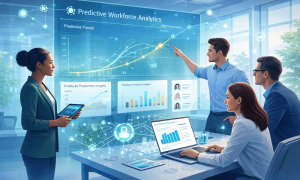
A Gartner study estimates that organizations using predictive wellbeing analytics reduce voluntary attrition by up to 25% compared to those relying on annual engagement checks alone.
Reason 4: Employees Actually Use It
One of the biggest risks with any wellbeing or coaching initiative is adoption. If employees do not use it, the ROI disappears.
AI coaching works because it meets employees where they already are—on their devices, in short moments, without judgment.
When designed well, virtual coaching tools feel more like support than surveillance. Employees can reflect privately, explore challenges, and receive guidance without worrying about optics or stigma.
This is where AI powered and personalized wellness plays a critical role. Coaching adapts to individual needs instead of forcing everyone through the same framework.
Internal pilots at large enterprises show that AI coaching tools often achieve 3–4x higher engagement than traditional learning portals, largely because interactions are brief, relevant, and optional.
Reason 5: It Is One of the Few Scalable Solutions That Impacts Performance and Wellbeing
Organizations often treat performance and wellbeing as separate efforts. In reality, they are tightly linked.
Chronic stress reduces cognitive flexibility, decision quality, and collaboration. Coaching that ignores mental load misses the root of many performance issues.
AI coaching systems designed as scalable mental health solutions help bridge this gap by supporting both output and sustainability.
A well-designed AI coach for employees does not push productivity at all costs. It encourages healthier work patterns, clearer boundaries, and better self-management—leading to more consistent performance over time.
The World Economic Forum estimates that poor mental health costs the global economy over $1 trillion annually in lost productivity. AI coaching offers a practical way to address this without overwhelming HR teams.
How to Find the Right AI Coaching Solution
Not all AI coaching tools are created equal. Choosing the wrong platform can create noise instead of clarity.
Here is a practical framework leaders can use when evaluating options.
1. Look for Evidence, Not Buzzwords
Avoid platforms that promise transformation without showing how outcomes are measured. Strong providers share data on engagement, retention, stress reduction, or leadership development.
Ask for case studies and pilot results tied to real business metrics.
2. Prioritize Privacy and Trust
Employees will not engage if they fear misuse of data. Ensure the platform clearly separates individual insights from organizational reporting.
This is especially important for solutions positioned as AI for employee wellbeing.
3. Demand Personalization at Scale
True personalized AI coaching adapts over time. Static prompts or generic advice will not sustain engagement.
Ask how the system learns, adjusts, and evolves with the user.
4. Integrate, Do Not Isolate
The best digital coaching platforms integrate with existing tools rather than replacing them. Coaching should fit naturally into the employee experience.
5. Balance AI With Human Oversight
AI works best when paired with human context. Platforms that allow escalation to human coaches, HR partners, or external support offer a more complete system.
What the Future of AI Coaching Looks Like
Over the next few years, AI coaching will shift from being an optional benefit to a core leadership infrastructure.
We will see:
- Coaching embedded into daily workflows
- Greater focus on prevention rather than recovery
- Wider use of behavioral data to support growth
Organizations that invest early will gain more than healthier teams. They will build cultures that adapt faster, retain talent longer, and support leaders more effectively.
As work continues to change, the question is no longer whether AI coaching belongs in the workplace—but how intentionally it is implemented.
Final Thought
AI coaching is not about outsourcing leadership or replacing human connection. It is about giving people better tools to think, reflect, and grow—at scale, without stigma, and without delay.
For corporate leaders navigating complexity, that may be one of the most practical investments available today.