
Organizations everywhere are facing a problem that no productivity tool or performance dashboard seems to fix. Despite investments in technology, process optimization, and training, workforce performance is declining across industries.
Employees are more connected than ever—yet engagement is falling. Teams are busy—but outcomes are slipping. Leaders feel pressure to deliver results while managing rising burnout, disengagement, and attrition. What we’re witnessing isn’t a temporary dip. It’s a full-scale workforce performance crisis.
The good news? This crisis is solvable—but not with traditional performance management alone.
Understanding the Workforce Performance Crisis
At first glance, performance issues appear operational: missed deadlines, lower output, or inconsistent quality. But when you look deeper, the root causes are human.
Employee productivity decline is often driven by chronic stress, emotional fatigue, and unclear expectations. Many teams operate in a constant state of urgency, leaving little room for recovery or focus. Over time, this environment creates widespread workplace performance issues that no amount of micromanagement can resolve.
Add hybrid work, economic uncertainty, and always-on digital communication, and it becomes clear why traditional models are breaking down. Employees aren’t underperforming because they don’t care—they’re underperforming because they’re overwhelmed.
Why Traditional Performance Management Is Failing
Most organizations still rely on outdated performance management strategies built for a different era. Annual reviews, static KPIs, and retrospective feedback do little to address real-time challenges.
In high-pressure environments, these systems often make things worse. Employees feel evaluated rather than supported, which increases anxiety instead of motivation. Managers, already stretched thin, lack the tools to detect early warning signs of disengagement or burnout.
As a result, workforce engagement challenges go unnoticed until they show up as absenteeism, errors, or resignations. By the time leaders react, performance has already suffered.
The Hidden Cost of Ignoring Wellbeing
Performance and wellbeing are deeply connected. When mental strain goes unaddressed, productivity at work declines—not because people are lazy, but because cognitive bandwidth is limited.
Burnout reduces focus, decision-making ability, and emotional regulation. It also erodes trust and collaboration, which directly impacts organizational performance. Teams become reactive instead of proactive, and innovation slows.
This is why forward-thinking organizations are reframing performance as a wellbeing issue—not just a skills or accountability problem.
Fixing Performance Starts With Mental Wellbeing
To truly fix the workforce performance crisis, organizations must move beyond surface-level fixes and address the human experience of work.
Modern solutions focus on AI for mental wellbeing, offering continuous, personalized support that adapts to individual needs. Unlike one-off workshops or generic wellness apps, these platforms provide ongoing insights into stress patterns, engagement levels, and emotional load.
By integrating wellbeing into daily workflows, companies can support employees before stress turns into burnout.
Using Data to Support, Not Surveillance
One reason employees resist performance tools is fear of being monitored or judged. The most effective platforms take a different approach—using insights to empower, not penalize.
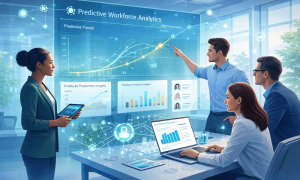
With employee performance analytics, leaders gain visibility into trends without singling out individuals. This helps organizations identify systemic issues—like unrealistic workloads or communication breakdowns—rather than blaming employees for struggling.
When paired with workplace wellbeing solutions, analytics become a tool for care, not control.
Preventing Burnout Before Performance Drops
Burnout is one of the biggest threats to sustainable performance. Once employees disengage emotionally, recovery becomes difficult and costly.
Proactive organizations focus on burnout prevention at work by offering support early and often. AI-powered platforms can deliver micro-interventions—short coaching moments, stress regulation techniques, or reflective prompts—exactly when employees need them.
These small, consistent actions help maintain energy, focus, and resilience across teams.
The Role of AI in Modern Workforce Performance
AI is not about replacing human leadership—it’s about augmenting it. An AI mental health platform acts as a continuous layer of support, available when managers aren’t.
For employees, it offers private, stigma-free access to guidance. For leaders, it provides insight into team health without invasive monitoring. And for organizations, it creates a scalable way to support performance across geographies and roles.
This is especially critical as companies expand and traditional, manager-led support models struggle to scale.
Aligning Performance With Employee Wellness Programs
High-performing organizations no longer treat wellness as a perk. They embed it into core strategy.
Forward-looking employee wellness programs align mental wellbeing with performance goals, ensuring employees have the emotional capacity to do their best work. This shift moves wellness from “nice to have” to “business-critical.”
When employees feel supported, they’re more engaged, more adaptable, and more invested in outcomes.
Building a Sustainable Performance Culture
Fixing the workforce performance crisis isn’t about pushing people harder. It’s about building environments where people can perform consistently without sacrificing their mental health.
That means:
- Replacing reactive performance reviews with continuous support
- Equipping managers with better tools, not more pressure
- Treating wellbeing as a leading indicator of performance
Organizations that make this shift don’t just recover performance—they future-proof it.
From Crisis to Competitive Advantage
The workforce performance crisis is a wake-up call. Companies that ignore it will continue to see declining engagement and rising costs. Those that address it thoughtfully will gain a powerful competitive edge.
By investing in mental wellbeing, leveraging intelligent tools, and rethinking how performance is supported, organizations can turn today’s crisis into tomorrow’s strength.
Because when people are supported, performance follows.