Most organizations worry about workload, meetings, or inefficient processes—but overlook one of the biggest silent productivity killers: phone addiction at work. Employees check their phones an average of 80–100 times a day, not out of urgency but habit. These micro-distractions fragment attention, slow down task completion, increase stress, and reduce overall output across teams.
Phone addiction isn’t just a personal issue; it’s a serious workforce performance challenge. And now, AI-powered digital wellbeing systems are emerging as one of the most effective ways to break unhealthy screen cycles without policing or micromanaging employees.
This article explores why screen dependency costs companies so much—and how AI tools offer a modern, scalable way to rebuild healthier focus habits.
Why Phone Addiction Is Eroding Workplace Productivity
Phone addiction creates more than occasional distraction—it rewires attention. Every notification or quick check triggers a dopamine loop, pulling employees out of deep work. When this happens repeatedly across the workday, it dramatically reduces cognitive efficiency.
Here’s what actually happens inside teams struggling with screen dependency:
- Focus becomes fragmented, leading to slow and inconsistent task completion.
- Employees feel overwhelmed because constant switching increases mental fatigue.
- Mistakes rise due to decreased sustained attention.
- Meetings become less effective when multitasking is normalized.
- Creativity and strategic thinking decline because the brain never enters sustained flow.
Even high-performing employees aren’t immune—phone overuse affects cognitive performance across roles, seniority levels, and industries.
AI Tools Can Fix Workplace Screen Habits Without Policing Employees
Traditional solutions like “no-phone policies” or time-tracking rarely work because they rely on restriction rather than behavior change. AI wellbeing platforms, in contrast, help employees build healthier digital habits through personalization, data intelligence, and supportive nudges—not force.
Here’s how AI tools actively reduce phone dependency in the workplace:
- AI analyzes phone usage patterns and identifies hidden triggers that cause distraction.
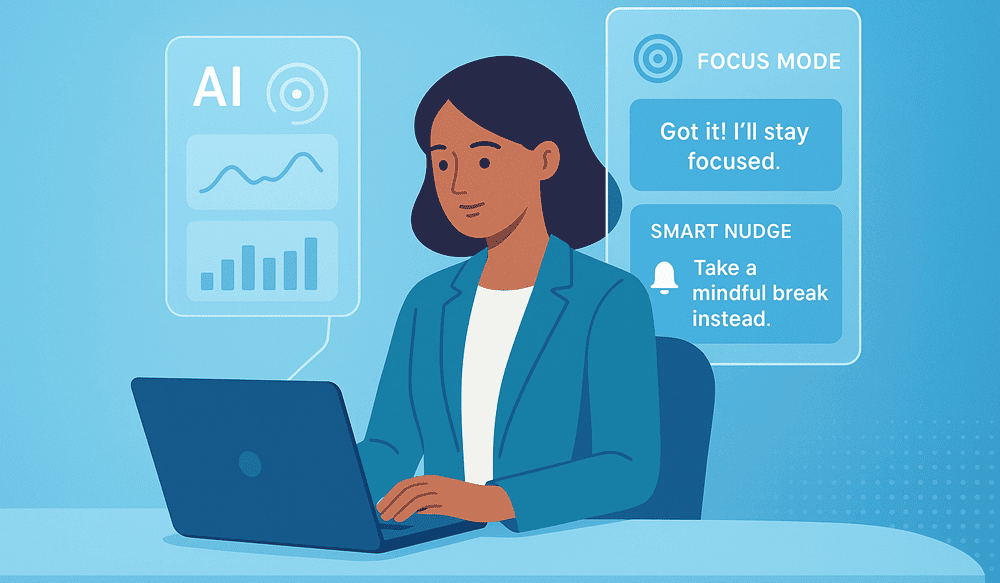
- Smart nudges guide employees into healthier habits at the exact moment of potential overuse.
- Machine learning models adapt recommendations to each employee’s stress level, workload, and focus patterns.
- AI integrates with calendars to automatically activate focus modes during deep work or important meetings.
- Digital wellbeing assistants provide micro-coaching to help employees rewire unhealthy screen behaviors.
Instead of “restriction,” AI creates alignment—employees feel supported rather than controlled.
How AI Rebuilds Healthy Focus Cycles Inside Workflows
AI wellness systems don’t wait for burnout, productivity loss, or disengagement to happen. They act daily at the micro-behavior level, helping employees stay mindful about digital usage and manage cognitive load.
AI interventions proven to reduce workplace phone addiction:
1. Predictive Distraction Prevention
AI models detect early signs of distraction, such as rapid app switching, repetitive checking, or interaction spikes during complex tasks. It then sends instant micro-nudges:
“Try a 10-minute focused sprint?”
“Shall I activate distraction blocking?”
These tiny interruptions save hours of lost time each week.
2. AI-Supported Deep Work Scheduling
AI syncs with calendars, work rhythms, and energy patterns to create personalized focus windows—then automatically activates device restrictions or muted notifications during those periods.
3. Mindfulness-Based Digital Breaks
AI-guided breathing, grounding, or micro-meditations help reduce the stress that triggers compulsive phone checking. Over time, this builds emotional resilience.
4. Personalized Screen Time Insights
Instead of generic charts, employees get behavioral insights:
- When they are most distracted
- Which apps trigger misuse
- How screen breaks impact cognitive energy
- When focus peaks and drops
Awareness alone can reduce screen checking by 20–30%.
5. Adaptive AI Nudges for Overuse Moments
The system intervenes when employees unconsciously slip into doom-scrolling loops:
“Want to refocus on your current task?”
“Ready to take a mindful break instead?”
This replaces negative reinforcement with supportive digital coaching.
Why Leaders Need to Pay Attention Now
Phone addiction is no longer an individual behavior—it’s a workplace culture issue. When even a few employees fall into unhealthy screen cycles, it affects team dynamics, collaboration, and overall morale. This is especially true in hybrid and remote environments where digital dependency is already high.
AI-driven digital wellbeing systems allow leaders to support employees without increasing surveillance or pressure. They encourage healthier habits in a psychologically safe, privacy-first way.
For organizations, this leads to:
- Higher focus levels
- Fewer errors and rework
- Faster execution of tasks
- Better meeting engagement
- Reduced cognitive fatigue
- A measurable boost in productivity
Companies that adopt AI wellbeing tools see sustained performance improvement—not through force, but through healthier digital behavior.
Conclusion: AI Is the Most Effective Way to Break Phone Addiction at Work
Phone addiction drains productivity, attention, and mental clarity. But instead of relying on outdated restrictions, organizations now have access to AI-powered digital wellbeing ecosystems that support employees in real time.
With predictive insights, personalized nudges, mindful break support, and adaptive focus tools, AI helps working professionals rebuild healthier digital habits—leading to a more focused, energized, and high-performing workforce.
If your organization wants to reduce distraction, improve execution, and boost productivity, AI-based screen wellness tools are one of the most scalable, employee-friendly solutions available today.