
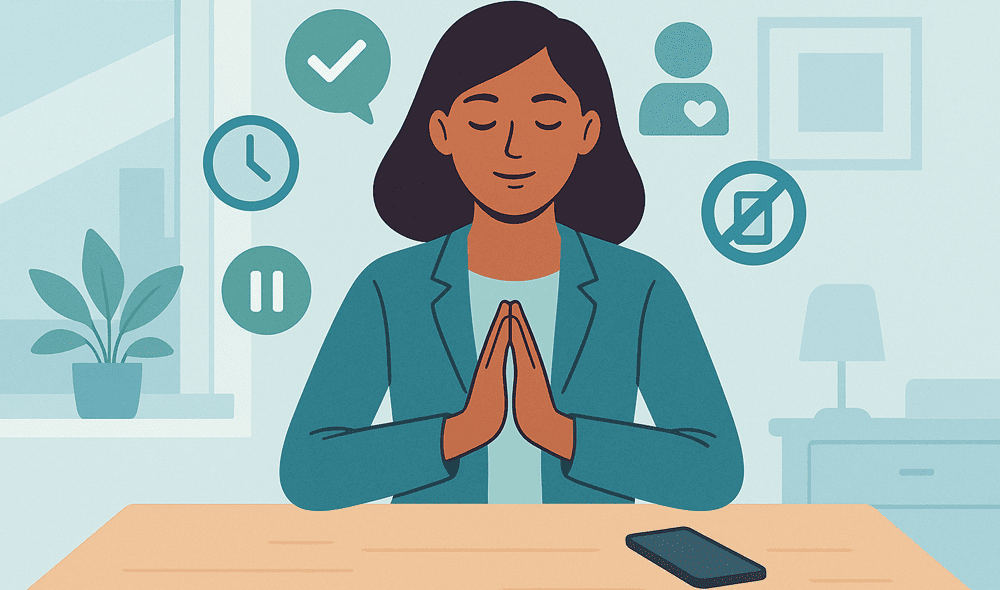
In recent years, remote work has become a standard mode of operation for many organisations. While remote work offers flexibility and autonomy, it can also lead to isolation, communication gaps, and increased mental stress for employees. Studies suggest remote work can decrease burnout compared to in-office setups, but that doesn’t eliminate all mental-health risks.
For distributed teams, “being remote” often means fewer spontaneous water-cooler chats, limited social bonding, and reduced peer connection. Over time, this can lead to feelings of disconnection, lower morale, and emotional fatigue. That’s where modern tools like AI chatbots can step in not to replace human connection but to supplement it, offering real-time support, privacy, and a safe space for individuals to process stress without judgment.
What Are AI Chatbots: And How They Work in Mental Health
An AI chatbot is a software program that uses natural language processing (NLP) and machine learning to engage in conversation with users often mimicking human-like dialogue. In mental health and wellness contexts, AI chatbots can act as virtual companions, providing immediate responses, gentle guidance, and coping strategies whenever the user needs them.
In practice, these chatbots can be embedded in workplace apps or wellness platforms, giving employees a confidential and accessible resource for dealing with stress, anxiety, or emotional overload.
What makes them suitable for remote teams
- 24/7 availability — Support isn’t limited to office hours; employees working across time zones or late hours can get help when they need it.
- Anonymity and privacy — Unlike reaching out to a manager or HR, chatbots offer a judgment-free zone, which can reduce stigma around mental health.
- Scalability — Organizations can provide support to many employees simultaneously without the overhead of a full human counseling team.
- Consistent access — Immediate support during stressful periods (e.g., tight deadlines, challenging projects) without scheduling appointment.
Benefits of AI Chatbots for Remote Team Mental Health
When implemented thoughtfully, AI chatbots offer several advantages — many of them particularly relevant for remote teams.
| Benefit | Explanation |
| Real-time support during stress or isolation | More than traditional EAPs, chatbots respond instantly when an employee is feeling overwhelmed or anxious. |
| Reduced mental health stigma | Employees may hesitate to talk to HR or managers; a chatbot provides a discreet alternative. |
| Personalised emotional check-ins and suggestions | Based on user inputs (journal, mood, reflections), chatbots can suggest breathing exercises, reframing thoughts, or coping strategis. |
| Early detection and intervention | Over time, usage patterns or sentiment analysis may reveal stress, burnout risk or emerging anxiety, helping organizations act proactively. |
| Scalability for distributed workforces | Whether a company has 50 or 5,000 remote workers, a chatbot scales easily, providing support to all simultaneously. |
Real-world effectiveness
Recent reviews of AI chatbots in mental health interventions — covering depression, anxiety, stress — show promising results: reductions in symptoms, increased emotional well-being, and positive behaviour change.
More recently (2025), a study of a generative AI mental health tool demonstrated significant reductions in depression and anxiety scores among users over a 10-week period. It also reported improvements in social interaction, perceived support, and overall emotional wellness.
This evidence suggests that AI chatbots can be a credible component of a broader workplace mental health strategy — especially in remote or hybrid settings.
How to Incorporate AI Chatbots in Remote Teams: A Practical Guide for Employers
If you lead a company or manage a distributed workforce, here are actionable steps to integrate AI chatbots effectively:
- Choose a trustworthy, privacy-centred tool
Ensure the chatbot provider follows data-protection standards, anonymizes data, and allows employees to opt-out or control shared information. - Integrate with existing wellness or HR platforms
Embedding chatbots into your company’s digital communication or HR tools (for instance, Slack, Microsoft Teams, or custom portals) makes access seamless — increasing adoption. - Promote the tool with clear communication
Many remote employees may not use mental health tools due to skepticism or lack of awareness. Provide transparent messaging about purpose, confidentiality, and limitations. - Use data (anonymized) to spot broader trends
Aggregated data — mood trends, usage frequency, stress spikes — can feed into a workplace wellness program. This helps leadership identify which teams or periods need extra support, aligning with AI Wellbeing Dashboards. - Combine AI support with human-led programs
While chatbots are valuable, they are best when part of a layered wellness strategy — not a replacement for human connection or professional therapy. - Encourage regular “emotional check-ins” through the chatbot
Make it part of company culture for employees to check in at intervals — particularly during high-stress projects or after major deliverables. - Monitor outcomes and employee feedback
Survey employees about usefulness, privacy comfort, and mental health impact. Adjust as needed.
Potential Pitfalls — And How to Mitigate Them
As helpful as AI chatbots can be, they’re not a silver bullet. Some limitations and risks must be carefully managed.
- Limited ability to interpret complex emotional context — AI may miss non-verbal cues, sarcasm, deep trauma, or crisis-level distress.
- Risk of over-reliance or emotional dependency — Users may begin relying on chatbots for social connection rather than seeking human interaction.
- Not a replacement for professional therapy — For serious conditions like depression, PTSD, or suicidal thoughts, chatbots alone are insufficient and potentially risky.
- Engagement drop-off over time — Some users may stop using the tool, reducing its long-term effectiveness.
- Data privacy and trust concerns — Employees must trust that their data is handled securely and used responsibly; lack of transparency can backfire.
Mitigation tips:
- Always pair chatbots with clear human support options
- Use anonymized, aggregated data for trend analysis — never individual surveillance
- Provide disclaimers: chatbots are support tools, not therapists
- Encourage periodic “human check-ins”, e.g., peer calls, manager conversations, or professional counselling
Why AI Chatbots Are Particularly Valuable for Remote Teams
Remote teams face a unique set of challenges compared to in-office teams:
- Time-zone differences make synchronous support difficult
- Communication is mostly digital, increasing risk of misinterpretation and emotional disconnect
- It’s harder to notice early signs of burnout or distress among remote workers
AI chatbots help bridge this gap. Because they are available around the clock, employees can reach out when they feel overwhelmed — whether that’s late at night after a long meeting, after a long commute, or during quiet hours.
Moreover, the relative anonymity and lack of judgment that chatbots offer can encourage people to open up about issues they would have hesitated to raise with a peer or HR — boosting team connection and overall employee wellbeing.
For organisations committed to supporting remote work mental health at scale, chatbots can become a cornerstone feature — especially when combined with human-led wellness initiatives.
Real-Life Example: How AI Chatbots Might Work in Your Company
Imagine a mid-sized company with 200 remote employees spread across different regions:
- The company embeds an AI chatbot in its HR portal and internal messaging platform.
- Employees are informed that the tool is there for peer support, stress relief, and emotional check-ins — not therapy.
- A developer working late on a tight deadline feels anxious. At 11:30 pm, they message the chatbot — it offers calming breathing prompts, a short reflective exercise, and a reminder to take a micro-break.
- Over weeks, leadership dashboards aggregate anonymized data showing a cluster of elevated stress signals among one project team. HR schedules a group “mental health check-in” call and offers optional coaching sessions.
- Because employees used the tool regularly and felt supported, the company sees fewer late-night burnout complaints — and improved retention.
This kind of scenario shows how AI chatbots can deliver real-time support, foster peer connection, and help organisations catch early signs of stress — all while respecting privacy.
Conclusion: AI Chatbots, A Smart Addition, Not a Replacement
For remote teams, maintaining mental health and team connection can be challenging. AI chatbots represent a practical, scalable, and accessible way to offer real-time support, peer-like interaction, and daily emotional check-ins. When used properly with transparency, data safeguarding, and human oversight, chatbots can significantly boost employee wellbeing and contribute to healthier workplace culture.
Remember: these tools work best as part of a layered approach combining technology with human empathy, managerial support, and formal mental health programs. For remote teams navigating stress, deadlines, isolation, and burnout risk, AI chatbots can act as a valuable piece of the puzzle helping teams stay connected, supported, and resilient in a changing world of work.