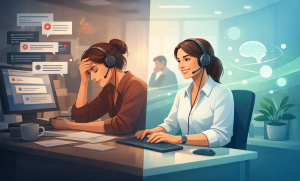
Managers today face a level of pressure that simply didn’t exist even five years ago. They’re expected to lead hybrid teams, maintain productivity, support employee wellbeing, hit business KPIs, and respond instantly to organizational changes. In this environment, burnout among leaders is not just common—it’s becoming a structural risk for companies.
But there’s a shift happening. Organizations are realizing that managers need the same level of emotional and operational support they extend to their teams. And this is where AI becomes a powerful enabler. Modern AI wellbeing and leadership tools are moving beyond reactive support and providing real-time insights, predictive signals, and scalable coping solutions that help managers stay mentally balanced while leading effectively.
This article explores how AI-supported leadership coping tools reduce manager burnout—and why companies should prioritize this next-gen support system.
Why Managers Burn Out Faster Than Anyone Else
Research consistently shows that managers face the highest levels of chronic stress in the workplace. Some common drivers include:
- Handling escalations and crises
- Balancing performance pressure with empathy
- Managing team conflicts
- Overseeing hybrid or distributed teams
- Constant digital overload
- Lack of time for their own wellbeing
When these pressures accumulate without the right support system, managers enter a cycle of stress that eventually affects their decision-making, emotional resilience, and ability to lead. Companies that fail to address this risk experience turnover spikes, team disengagement, and a drop in overall productivity.
That’s why forward-thinking organizations are using AI not as a replacement for human leadership—but as a strategic wellbeing companion that empowers managers every day.
How AI Tools Detect Burnout Before It Becomes a Crisis
Modern AI wellbeing platforms can identify early warning signs of stress and depletion long before a manager reaches breaking point. Tools like below help create a proactive safety net.
1. Real-Time Stress Signals Through AI Stress Monitoring
Managers rarely admit they’re stressed until it’s too late. AI tools that analyze work patterns, workload pressure, communication cues, and physiological signals provide real-time insights into rising stress levels. With bold features like AI Stress Monitoring, organizations can identify risk patterns and intervene faster.
These systems highlight:
- Elevated work hours
- Increased message intensity or negative sentiment
- Overloaded meeting schedules
- Reduced break patterns
- Sudden productivity fluctuations
By receiving early alerts, managers can adjust workload or seek timely support—before stress turns into burnout.
2. Predicting Burnout Long Before Symptoms Show
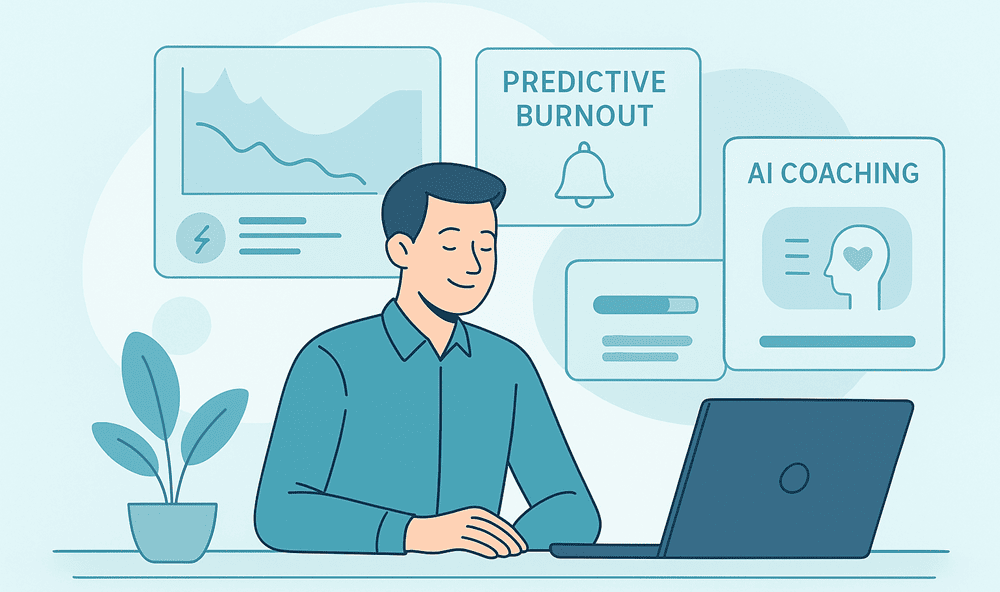
Modern wellbeing AI doesn’t just detect stress—it forecasts future burnout risks. Through behavioural analytics, workload trends, and sentiment patterns, systems using predictive burnout forecasting can identify managers who are likely to struggle weeks in advance.
This predictive layer empowers HR teams to:
- Reduce workloads
- Adjust team structures
- Provide targeted wellbeing resources
- Offer coaching or resilience sessions
- Rebalance responsibilities
Instead of crisis-driven intervention, AI transforms burnout management into a proactive strategy.
How AI Supports Managers Emotionally and Mentally
Managers often carry silent emotional burdens—uncertainty, performance pressure, decision fatigue, imposter syndrome. AI leadership tools act as a supportive, non-judgmental companion that provides mental clarity and emotional grounding.
1. Instant Emotional Support Through AI Coaching for Leaders
Personalized micro-coaching is becoming one of the most impactful uses of AI in leadership development. Using smart conversational tools like AI coaching for leaders, managers receive:
- On-demand guidance during high-stress moments
- Support for tricky team conversations
- Scripts for difficult feedback discussions
- Reflection exercises to build emotional regulation
- Decision-making frameworks to avoid overwhelm
Instead of waiting for monthly coaching sessions, managers get support the moment they need it.
2. Visibility Into Their Mental & Leadership Patterns
Most managers don’t realize how their own behaviours shift under stress. AI tools like AI wellbeing dashboards help them understand subtle but critical patterns, including:
- Emotional highs and lows
- Peaks in stress throughout the week
- Response patterns to conflict
- Cognitive fatigue based on workload
- Leadership style changes under pressure
These insights create stronger self-awareness—a foundational skill for resilient leadership.
How AI Reduces Operational Overload for Managers
Many burnout cases aren’t emotional—they’re operational. Managers spend up to 60% of their day on administrative tasks: check-ins, follow-ups, documentation, meeting prep, performance reviews. AI tools drastically reduce this load.
1. Automated Check-Ins That Support Team Health
With tools like AI for HR check-ins, managers no longer need to manually track how each team member is doing. AI proactively sends wellbeing nudges, gathers feedback, runs anonymous micro-surveys, and sends managers actionable insights.
This frees leaders from:
- Monitoring emotional climate
- Chasing updates
- Identifying early team conflicts
- Tracking employee workload stress
And helps them shift energy toward strategic leadership—not admin tasks.
2. AI-Assisted Workload Balancing to Reduce Pressure
Burnout often stems from unfair workload distribution. AI systems help managers:
- Identify overloaded team members
- Predict upcoming workload spikes
- Recommend resource reallocation
- Flag time-consuming processes
- Suggest optimization opportunities
This protects both managers and their teams from chronic overload.
AI’s Role in Industry-Specific Manager Burnout
Burnout patterns vary across industries, and AI is uniquely capable of supporting sector-specific challenges.
For IT & Engineering Leaders
Technology teams face constant deadlines, production incidents, and cognitive fatigue. That’s why AI wellbeing platforms built for technology environments like managing IT burnout with AI bring unique support functionalities such as:
- Incident stress monitoring
- Cognitive load alerts
- Fatigue tracking during release cycles
- Work-hour pattern analysis
- Sprint-overload notifications
By integrating AI into engineering workflows, organizations protect their most critical leaders from chronic burnout.
Creating a Culture Where Managers Feel Safe Asking for Help
Technology alone doesn’t solve burnout. AI becomes transformative when paired with a culture that destigmatizes help-seeking. Companies that see the best results:
- Normalize wellbeing as part of leadership development
- Encourage managers to use AI tools openly
- Make wellbeing dashboards a regular part of 1:1s
- Train HR teams to interpret AI-driven signals
- Recognize early stress management as a leadership skill
When leaders feel safe using AI wellbeing tools, burnout prevention becomes a shared responsibility—not a personal burden.
The Future: AI as a Leadership Wellbeing Companion
The next generation of leadership support systems will combine:
- Emotionally intelligent coaching
- Workload optimization
- Predictive burnout analytics
- Performance resilience training
- Cognitive and emotional monitoring
- Personalized coping interventions
Managers will no longer face stress alone. AI will support them continuously—helping them navigate pressure with clarity, balance, and confidence.
And for companies, the ROI is undeniable: healthier leaders, stronger teams, and a more resilient workplace.