Maintaining employee well-being across borders is one of the toughest responsibilities of a modern business. Stress isn’t limited to office hours. Burnout doesn’t wait for HR policies to update. When companies have employees spread across time zones, high-pressure roles, and cultural differences, traditional wellness programs quickly reach their limit.
This is where an AI mental fitness platform workplace becomes transformative. It gives employees access to continuous psychological support personalized, confidential, and available anytime they need it without overwhelming HR teams or budgets. By integrating advanced analytics with real-time guidance, these platforms help companies create sustainable, large-scale mental wellness.
The High Cost of Ignoring Workforce Well-Being
Leaders often feel the impact of mental strain in subtle ways first:
- Slower decision-making
- Increased errors and conflict
- Disengagement in meetings
- Higher turnover intentions
Today’s reality is clear:
Employees cannot perform at their best if they are mentally exhausted while trying to keep up with nonstop business demands.
It becomes even more complex in distributed teams. Communication delays, cultural pressure, and long working hours can push people into silent burnout. With enterprise wellbeing tech, leaders can finally understand and respond to employee needs in real time — not after a crisis.
What Makes AI Mental Fitness Scalable?
The scalability of an AI platform comes from three core features:
1️⃣ Continuous Support Across All Time Zones
Employees can speak to a virtual coach at any hour. Whether it’s 3 pm in London or 2 am in Singapore, 24/7 AI coaching removes the need to “wait until Monday.”
AI coaching for leaders encourages help-seeking early — before issues spiral.
2️⃣ Adaptive, Personalized Guidance
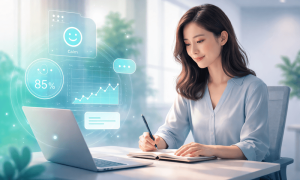
Every employee experiences stress differently. AI stress monitoring learns patterns — when someone usually struggles, what triggers performance drops, and what interventions help them recover faster.
Personalization leads to real engagement because the support fits the employee’s needs.
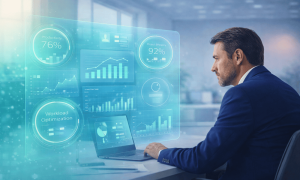
3️⃣ Predictive Wellbeing Analytics for HR & Leadership
Instead of guessing what’s wrong, companies get workforce insights like:
| Data Indicator | What It Reveals | Company Action |
| Sleep and fatigue patterns | Risk of absenteeism | Workload adjustments |
| Digital behavior signals | Rising anxiety trends | Support programs |
| Drop in participation | Early burnout alerts | Manager check-ins |
| Communication tone shifts | Emotional distress | Confidential outreach |
These signals help organizations intervene before turnover or health breakdowns occur. Leveraging predictive wellbeing analytics creates a proactive well-being strategy.
The Global Workforce Challenge: Same Problems, Different Contexts
A frontline worker in Madrid and a data analyst in Mumbai may share similar stress — but how they express or cope with it differs greatly. An AI mental fitness platform workplace adapts to
✔ local language
✔ cultural nuances
✔ varying workloads
✔ privacy expectations
This makes it an ideal foundation for global workforce support — no team left behind, no office forgotten.
Why HR Teams Prefer AI-Supported Well-Being
HR leaders are expected to be everywhere:
supporting people, responding to crises, running engagement surveys, aligning policies…
But there simply aren’t enough human hours in the day.
AI helps by:
- Handling high-volume employee queries
- Tracking health trends without judgment
- Suggesting proactive interventions
- Reducing administrative burden
With scalable mental health AI, HR finally gains the bandwidth to focus on deeper, human-first initiatives.
Employee Experience: Private, Judgment-Free Support
Not everyone wants to raise their hand publicly and say,
“I’m struggling.”
Fear of stigma still holds employees back. AI for wellness coaching provides a confidential entry point:
- No waiting weeks for an appointment
- No fear of being judged by colleagues
- No pressure to “prove” they’re struggling
In fact, usage spikes most outside work hours, showing people often need support when managers are offline.
The Operational Advantage for Business Leaders
Beyond well-being, this technology strengthens business performance:
📌 Lower attrition
📌 Improved productivity and focus
📌 Better engagement in hybrid environments
📌 Stronger employer brand
Top organizations are already adopting enterprise wellbeing tech as a strategic asset — because happy employees are profitable employees.
24/7 AI Support in Action — A Quick Scenario
Picture this:
A senior product manager in the U.S. logs off after a tense discussion with a client. Despite the hour, their mind is buzzing and stress is building. They open the mental fitness app and chat with the AI coach:
- It guides a grounding exercise
- Tracks behavioral stress markers
- Schedules a check-in next morning
- Recommends a short recovery break
No delay. No escalation. No silent burnout.
Just timely, meaningful support.
AI vs Traditional Well-Being Support
| Feature | Traditional Programs | AI Mental Fitness Platform Workplace |
| Accessibility | Business hours only | 24/7 global availability |
| Personalization | Generic tools | Tailored to employee behavior |
| Scale | Limited staff | Unlimited conversations |
| Cost efficiency | Increases with headcount | Economies of scale |
| Data insights | Minimal | Predictive analytics for HR |
Leaders get clarity.
Employees get relief.
Everyone wins.
Implementing It Right: What Leaders Must Consider
To succeed, organizations must:
- Be transparent about how data is used
- Obtain employee consent without pressure
- Blend human support with AI — not replace it
- Train managers to respond to well-being signals
- Monitor feedback and continuously adapt
Scaling mental health requires trust. Tech alone isn’t enough — but it’s a strong foundation.
Final Thoughts: The Future Belongs to Organizations That Care
A modern business cannot grow if its people are quietly burning out.
Supporting mental resilience must shift from optional perk → everyday experience.
And only an AI mental fitness platform workplace can provide that level of continuous care.
Companies that embrace this shift will:
✔ protect their global workforce
✔ improve business outcomes
✔ build a culture where people stay, grow, and truly thrive
The future of workforce well-being is always-on, personalized, and powered by AI — with heart and humanity at the center.