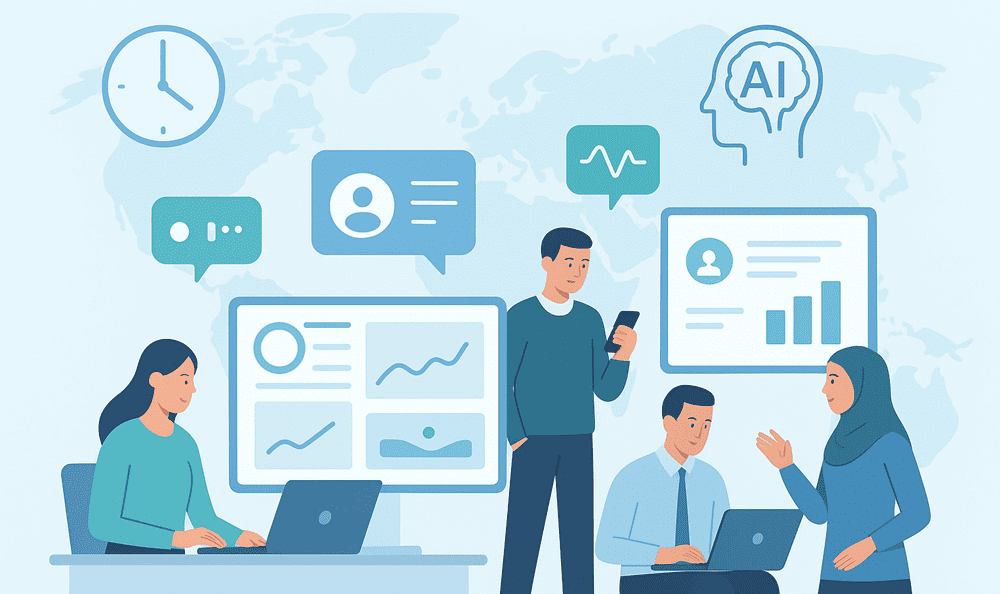
Modern organizations run across time zones, cultures, and work styles. With this shift, mental health needs are no longer limited to in-office teams or fixed working hours. People want support that matches the pace of their work and the pressure of a global environment. This is where an AI mental fitness platform workplace model is gaining attention.
Instead of relying only on traditional counseling or monthly check-ins, companies are now moving toward always-available tools powered by enterprise wellbeing tech. These systems can guide each employee through personalized strategies, track early signs of stress, and strengthen daily habits that protect long-term mental wellness.
This article explores how these platforms work, why they fit multinational teams, and what business leaders should consider when adopting them.
Why Mental Fitness Needs a Scalable Digital Framework
Most companies already know mental health affects performance. Research from WHO shows that anxiety and depression cost the global economy over $1 trillion every year due to lost productivity. Yet many employees still hesitate to seek help, especially in distributed teams.
A scalable mental health AI system helps fill the gaps through:
- Round-the-clock guidance
- Low-friction access
- Anonymous check-ins
- Small, regular nudges that form healthier routines
Traditional wellness programs often break down at scale. A team of 10,000 located across continents doesn’t have equal access to human support. This is why leaders are studying AI-supported models that adjust to work cycles, location, and individual workloads.
How an AI Mental Fitness Platform Works in the Workplace
A modern AI-supported wellbeing system includes multiple layers rather than a single feature. Here is a simple breakdown of how these tools usually operate:
1. 24/7 AI Coaching for Micro-Support
Real-time conversation tools guide employees through brief grounding steps, stress management techniques, or reflective practices. These interactions don’t replace therapists, but they bring everyday help when people feel overwhelmed.
One example: short mindset resets during high workloads or night shifts. This is also where features like AI coaching for leaders make the biggest difference.
2. Predictive Wellbeing Analytics to Spot Early Patterns
AI systems detect signals such as reduced sleep quality, changes in work patterns, or emotional tone over time. These signals help organizations understand when and where support is needed.
Predictive insights help HR teams design better programs without relying on guesswork.
Such analytics are often part of broader predictive wellbeing analytics tools.
3. Mental Fitness Micro-Habits for Long-Term Growth
Instead of overwhelming users with long modules, AI-driven platforms split challenges into small steps:
- 2-minute breathing resets
- Short journaling prompts
- End-of-shift reflection
- Energy-level tracking
- “Tomorrow readiness” plans
This kind of micro-habit approach supports global workforces who may not have the same schedules.
Why This Model Works for Global Teams
Organizations with distributed teams face unique challenges—language differences, uneven access to care, and varying expectations around mental health. A digital system can reduce barriers in several ways:
1. Supports All Time Zones
A support model that works only during office hours leaves out large portions of a multinational workforce. An AI mental fitness platform workplace runs without location boundaries.
2. Helps Employees Who Don’t Speak Up
Some team members prefer self-guided tools rather than face-to-face conversations. AI-based guidance creates a private space where they can ask questions or seek help without feeling judged.
This becomes especially helpful in cultures where mental health discussions are still sensitive.
3. Reduces Delays in Accessing Support
Traditional EAP services are often underused. People delay seeking help until problems worsen. AI-supported mental fitness steps in early with:
- Fast prompts
- Emotional tone tracking
- Short nudges
- Active reminders
- Regular check-ins
This direct, ongoing interaction helps people manage stress before it grows into burnout.
Key Features Leaders Should Expect in a High-Quality Platform
Below is a quick comparison table to help business owners understand what differentiates stronger platforms from basic ones:
| Feature | Why It Matters | Example Use Case |
| Global accessibility | Supports remote + in-office teams | Employees in APAC and US get equal support |
| Predictive wellbeing analytics | Detects rising burnout risk earlier | HR gets a dashboard to plan interventions |
| 24/7 AI coaching | Instant help outside office hours | Shift workers receive mental reset strategies |
| Multi-language guidance | Improves cultural fit | Non-English teams engage more actively |
| Secure, private support | Builds trust and usage | People can talk openly without fear |
How AI Supports Managers, Not Just Employees
A large part of workforce stress is linked to unclear expectations, workload pressure, and rapid changes. Managers often feel unprepared to guide their teams through emotional challenges.
AI tools provide leaders with:
- Team mood summaries (without exposing personal details)
- Predictive risk alerts
- Guidance on handling tough conversations
- Recommendations for workload patterns
- Training modules they can access on demand
This improves leadership consistency, especially in large or fast-growing organizations.
Real Examples of AI Mental Fitness Impact
Here are early results companies have reported after integrating AI into their wellbeing stack:
- 29–40% reduction in unmanaged stress indicators
- 40%+ increase in micro-habit completion rates
- Over 50% rise in self-reported mental readiness
- Higher participation among employees who never used EAP programs
- Drop in last-minute sick leaves in high-pressure roles
These numbers signal that mental fitness tools help create ongoing, behavioral improvements instead of one-time engagement spikes.
Future Outlook: Mental Fitness as a Continuous Business System
For global businesses, wellbeing programs cannot depend solely on in-person sessions. A modern AI mental fitness platform workplace acts like an always-present companion: guiding, checking, reminding, and nudging employees toward better habits.
As AI becomes more capable, we will see:
- Deeper personalization
- Better understanding of emotional tone
- More accurate risk prediction
- Stronger cultural adaptability
- Integration with wearable tech
- Digital nudges tied to work patterns
In the long run, mental fitness will become part of everyday work systems rather than a separate initiative.
Final Thoughts
Scaling mental wellness requires more than motivation; it calls for a system that meets people where they are—any time, any shift, any country. AI-supported mental fitness platforms allow companies to build healthier organizations without depending only on human capacity.
For leaders, the priority is not replacing human care but extending it. When deployed thoughtfully, these systems protect employees, strengthen teams, and support sustainable performance across the entire workforce.