
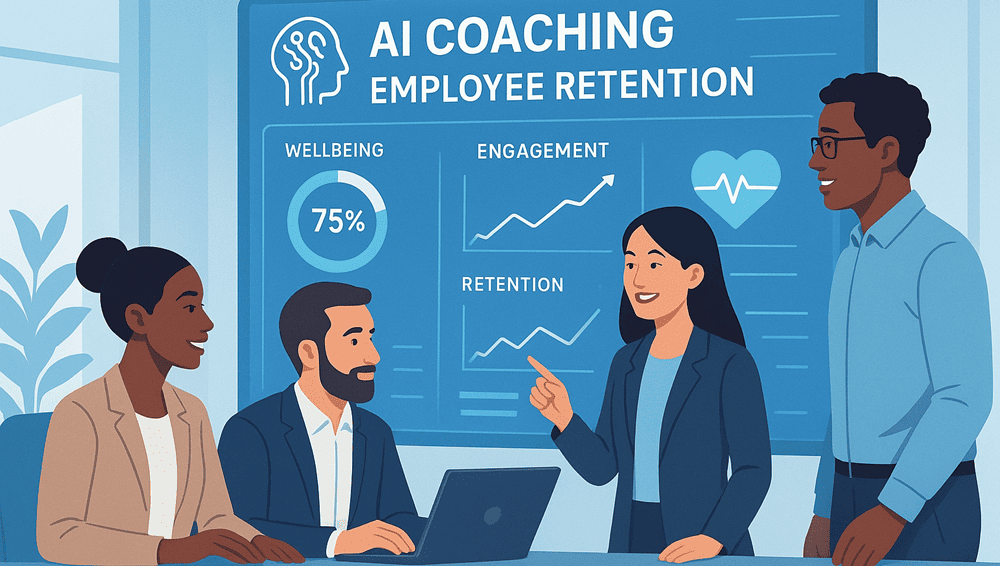
Retaining employees is tougher than ever. High turnover costs companies millions, disrupts teams, and weakens employer branding. But there’s a growing solution changing how organizations keep top talent: employee retention AI powered mental health coaching. This post explains how AI tools, coaching, and wellbeing programs reduce turnover, help employees stay engaged, reduce stress, and drive success.
What is Employee Retention AI & Why It Matters
“Employee retention AI” refers to technologies that help organizations spot retention risks, offer mental health coaching, and provide wellbeing supports before problems escalate.
- Predictive analytics can flag employees at risk of leaving—based on sentiment, feedback, workload patterns.
- AI mental health coaching offers personalized, scalable support for employees, helping with stress, burnout, and emotional wellbeing.
- These tools combine with wellness engagement programs to strengthen loyalty and reduce turnover.
The reason this matters: turnover isn’t just losing people; it’s losing experience, incurring replacement costs, damaging morale. Research shows companies using AI-based retention strategies see up to 28% reduction in turnover among frequent users of AI mental health wellness tools. Vantage Fit
How AI Mental Health Coaching Helps Reduce Turnover
Here are specific ways AI coaching employee success and related strategies contribute to retention:
| Mechanism | What AI Does | Outcome for Retention |
|---|---|---|
| Early Detection | Monitors feedback, work hours, stress indicators | Managers can intervene before disengagement |
| Personalized Support | Coaching programs tailored by risk profile, preferences | Employees feel seen, supported, increasing loyalty |
| Stress Regulation | Tools for workplace stress reduction: coaching, reminders, AI triage | Less burnout, fewer resignations |
| Wellness Engagement | Gamified apps, challenges, reward systems | Higher participation leads to stronger connection with company |
| Continuous Learning & Growth | AI suggests development paths, micro-learning, coaching | Growth opportunities correlate with retention |
Real-World Evidence & Statistics
Data shows AI mental health tools are no longer theoretical—they produce measurable benefits.
- Companies using AI retention strategies report about 25% improvement in employee satisfaction when concerns are addressed quickly.
- Frequent users of AI wellness engagement platforms saw 28% lower turnover.
- In workplace wellness statistics for 2025, 69% of HR leaders said their wellness initiatives improved employee retention. Recruiters LineUp
- Firms that integrate employee retention AI into their HR-tech stacks have noticed fewer sick days and 28% fewer stress-related absences.
These numbers affirm that investing in AI mental health coaching is more than HR lip service—it delivers real return.
Steps to Implement AI-Mental Health Coaching for Retention

For B2B leaders looking to adopt this, here are actionable steps.
- Assess current challenges
Start by gathering data: exit surveys, engagement scores, absenteeism metrics, stress levels. Identify which departments or groups are most at risk. - Choose appropriate AI tools
Seek platforms that offer coaching, sentiment/predictive analytics, mental health supports. Make sure these tools respect privacy, data security, and are transparent. - Incorporate into broader strategy
AI coaching shouldn’t be an isolated initiative. It works best when woven into employee wellbeing solutions across your organization. - Promote the culture of supportive workplace
Leadership must buy in. Communicate openly about mental health, ensure employees know about the tools, normalize usage. - Monitor & adjust
Use KPIs like turnover rate, wellness engagement, absenteeism, satisfaction scores. Frequent assessments help tweak programs to better fit employee needs.
Linking AI Retention to Other HR Areas
Retention via wellbeing connects with other HR functions. Here’s how they interrelate:
- Onboarding matters: from day one, a strong employee onboarding experience that includes mental health coaching sets tone for long-term loyalty.
- Platform support: implementing a workplace wellbeing platform centralizes data, coaching, feedback, and helps scale retention efforts.
- AI Coaching in various contexts: managers, virtual assistants, in-app coaching all work to foster AI coaching employee success.
- Stress stages: integrating stress management AI supports employees not only when problems are severe, but early and continuously.
- Absenteeism and turnover are linked. Tools that help with reducing absenteeism often contribute to better retention, because employees feel healthier, supported, and able to show up.
Challenges & Best Practices
Implementing AI-driven retention and mental health coaching works well, but there are pitfalls. Leaders should be aware of:
- Privacy & trust: Employees are wary of constant monitoring. Transparency about what data is used how, opt-outs, and strong data protection are essential.
- Balancing AI with human touch: AI can support at scale, but human coaches, managers still needed for empathy, judgement, relational work.
- Avoiding over-automation: If every interaction is mediated by AI, it can feel impersonal. Use AI to assist improvements not replace human interactions.
- Ensuring fairness & bias control: Algorithms must be tested to avoid bias in who gets flagged for support, who benefits. Inclusive design matters.
- Maintaining engagement: Tools must stay relevant, simple, easy to use. If engagement drops, the retention benefit disappears.
Measuring Success
To know if your investment in employee retention AI is working, track something like:
- Turnover rate (overall, by department) pre- and post-implementation
- Wellness engagement metrics: how many employees use coaching tools, chatbots, programs
- Absenteeism, sick-leave statistics
- Employee satisfaction / engagement / net promoter score of workplace
- Mental health / stress indicators via surveys or AI sentiment analysis
Conclusion
For leaders focused on keeping great people, support must go beyond perks. With employee retention AI, companies can offer mental health coaching at scale, detect risks early, reduce turnover, improve wellbeing, and build loyalty.
If organizations commit to using the right tools, ensure privacy, combine AI with human empathy, and measure impact, retention through wellbeing becomes not just a goal but an operational strength.