Meetings are a regular part of professional life, yet many employees feel uneasy before speaking up in a virtual call or presenting ideas to leadership. According to research from the American Psychological Association, workplace stress often rises when employees feel evaluated in front of others.
In hybrid and remote workplaces, this pressure can increase because conversations happen through cameras and screens rather than natural face-to-face interaction.
This is where digital tools for meeting anxiety are starting to make a real difference. Modern platforms combine artificial intelligence, behavioral science, and workplace coaching to help employees speak with clarity and confidence. For organizations focused on productivity and employee wellbeing, these tools are becoming an important part of professional development and mental health strategies.
Why Meeting Anxiety Is Becoming a Workplace Challenge
Many employees experience nervousness before joining meetings. This can show up in different ways, avoiding speaking, over-preparing notes, or feeling stressed about presenting ideas to managers.
Studies from Harvard Business Review suggest that more than 40% of professionals feel uncomfortable sharing opinions in meetings with senior leadership. When employees hold back, businesses lose valuable ideas and collaboration opportunities.
Common triggers include:
- Fear of negative judgment from colleagues
- Pressure to present data clearly
- Limited experience with presentations
- Cultural differences in communication styles
As organizations adopt hybrid work models, virtual meeting anxiety solutions are gaining attention. Digital coaching platforms and AI-based training tools now provide employees with structured ways to practice communication and reduce stress before meetings.
What Are Digital Tools for Meeting Anxiety?
Digital tools for meeting anxiety are software platforms that help employees build confidence before and during meetings. Many of these solutions use AI, speech analysis, or guided exercises to help people prepare for presentations, control nervousness, and communicate clearly.
These tools typically fall into three main categories:
| Tool Type | How It Helps Employees | Example Features |
| AI Coaching Platforms | Provide feedback on speaking style and clarity | Speech analysis, tone detection |
| Behavioral Wellness Apps | Help manage anxiety before meetings | Guided breathing, focus exercises |
| Presentation Practice Tools | Simulate real meeting scenarios | Virtual audience simulations |
Many companies are now integrating AI behavioral wellness tools into employee support programs to strengthen communication skills while also supporting mental health.
How AI Is Changing Workplace Communication Training
Traditional presentation training often happens once or twice a year through workshops. AI platforms are changing this model by providing daily micro-coaching that employees can access whenever they need it.
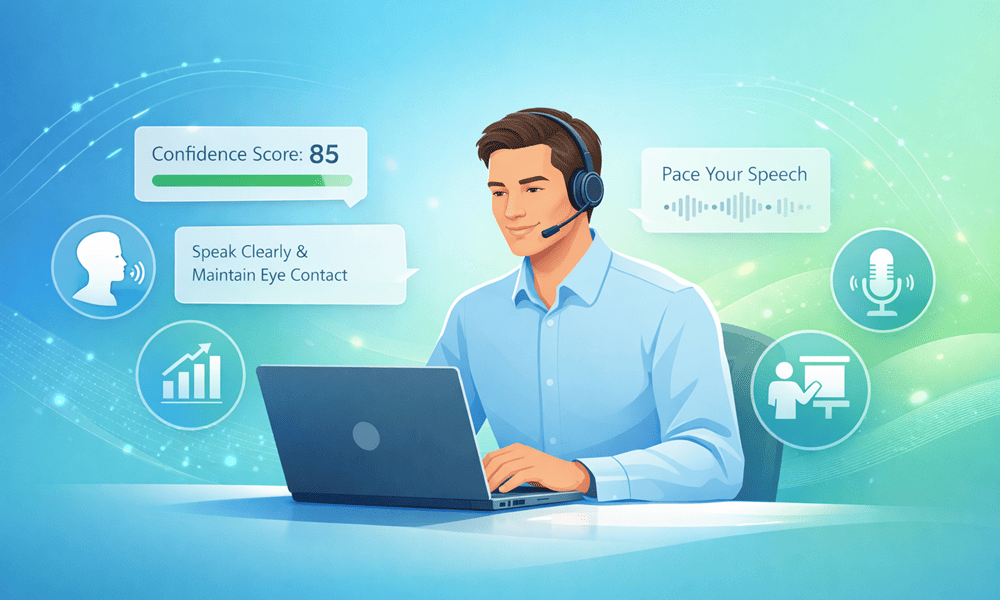
For example, AI for public speaking anxiety tools can analyze voice tone, pacing, and filler words. Employees receive immediate suggestions for improvement, allowing them to refine their communication style before an important meeting.
This approach supports modern learning habits where professionals prefer quick, personalized feedback instead of long training sessions.
Many organizations are now connecting these systems with AI-powered employee support platforms that combine communication coaching with broader wellbeing programs.
Features to Look for in Workplace Communication Tools
Not every platform addresses meeting anxiety in the same way. When evaluating workplace communication confidence tools, leaders should look for solutions that support both skill development and stress reduction.
Here are some useful capabilities:
- Real-time speech feedback during practice sessions
- AI-guided rehearsal for presentations
- Breathing and focus exercises before meetings
- Video playback for self-review
- Confidence tracking dashboards
These features help transform preparation from a stressful task into a guided learning process. Over time, employees develop stronger communication habits and become more comfortable sharing ideas.
Organizations that adopt these systems often see improvements in Workplace communication coaching programs, particularly for early-career professionals and new managers.
The Role of AI Coaching for Presentations
One of the most practical applications of AI in this area is AI coaching for presentations. These tools simulate realistic meeting situations so employees can practice in a safe environment.
For example, an AI coach may:
- Ask follow-up questions like a manager would
- Analyze the speaker’s pace and tone
- Provide tips for improving structure and clarity
This type of feedback helps employees prepare for boardroom presentations, team briefings, or client discussions.
Companies that adopt this technology often report improved engagement during meetings because employees feel more prepared and less worried about speaking up.
Such tools also support broader initiatives focused on AI confidence building, helping professionals grow communication skills over time.
Digital Support for Managing Meeting Stress
Beyond presentation training, many platforms focus on emotional regulation before meetings. These systems are often designed as workplace stress reduction apps that include short guided exercises employees can use minutes before a meeting begins.
Common techniques include:
- Short breathing exercises
- Focus prompts for reducing overthinking
- Visualization techniques for presentations
These tools complement existing corporate wellbeing programs aimed at improving Stress management at workplace strategies. Instead of reacting to anxiety after it affects performance, employees learn to manage it proactively.
How Digital Tools Improve Employee Confidence
The biggest advantage of employee confidence software is consistency. Unlike occasional workshops, digital platforms allow employees to practice communication skills regularly.
Over time, this leads to measurable improvements in workplace behavior:
“Employees who feel psychologically safe during meetings contribute more ideas and collaborate more effectively.”
Organizations that prioritize Mental wellbeing at work often integrate communication tools with leadership development programs. When employees feel confident speaking in meetings, they are more likely to participate in strategic discussions and innovation initiatives.
Addressing Social Anxiety in Professional Settings
Meeting anxiety is closely linked to broader social confidence challenges. Employees who feel nervous in group conversations may avoid speaking even when they have valuable insights.
Digital coaching tools can help by offering structured exercises for managing these situations. Some platforms include simulated conversation practice, which helps professionals respond calmly during discussions.
These features align closely with broader solutions designed for AI for social anxiety, where behavioral insights and coaching strategies help individuals become more comfortable in group interactions.
When employees develop stronger interpersonal skills, they also improve their Emotional intelligence at work, which strengthens teamwork and leadership communication.
Real-World Example: AI Coaching in Corporate Training
Several large organizations are already experimenting with AI-based communication tools. For example, companies in the technology and consulting sectors often use digital coaching platforms to prepare employees for client presentations.
One consulting firm reported that after introducing AI-driven presentation practice software, employee confidence scores increased by nearly 30% during internal assessments.
Employees also reported feeling less anxious before meetings because they had practiced their talking points multiple times with AI guidance.
This demonstrates how virtual meeting anxiety solutions can support both employee wellbeing and business performance.
Best Practices for Introducing Digital Confidence Tools
For business leaders considering these solutions, implementation strategy matters. Simply deploying software is not enough; employees need encouragement and context.
Successful organizations usually follow a few key steps:
- Introduce tools as part of professional development programs
- Encourage leaders to use the platforms first
- Provide short training sessions on how the tools work
- Integrate the tools into existing learning platforms
When companies combine these tools with broader wellbeing initiatives, employees see them as supportive resources rather than performance monitoring systems.
The Future of Meeting Confidence in Digital Workplaces
As remote and hybrid work continue to expand, organizations will rely more on digital tools for meeting anxiety to support employee communication skills.
Future platforms are likely to include:
- Real-time AI feedback during live meetings
- Emotion recognition for stress signals
- Personalized coaching based on meeting performance
These advancements will transform communication training into an ongoing process rather than occasional workshops.
For leaders focused on innovation and workforce wellbeing, investing in AI-driven coaching tools is becoming a practical step toward building confident, collaborative teams.
Final Thoughts
Meeting anxiety affects employees across industries, from early-career professionals to experienced managers. When individuals hesitate to speak, organizations lose opportunities for creativity and collaboration.
Digital coaching platforms and AI-powered wellness tools offer a practical solution. By combining communication training with behavioral support, these systems help employees prepare for meetings with greater confidence.
As organizations continue investing in employee wellbeing and leadership development, digital tools for meeting anxiety will likely become a standard part of modern workplace learning programs.
Businesses that adopt these solutions early can create a culture where employees feel comfortable sharing ideas, contributing to discussions, and growing into stronger leaders.