Customer experience teams are the backbone of modern businesses. They handle complaints, solve problems, calm frustrated customers, and protect brand reputation—often all at once. But behind the scenes, a growing customer support burnout crisis is quietly eroding performance, morale, and retention across industries.
From call centers to live chat teams, stress is no longer an occasional challenge. It’s becoming a structural problem. And traditional wellness programs are failing to keep up. The good news? AI-driven mental wellbeing tools are beginning to change how organizations protect and support their frontline teams.
Why Customer Support Burnout Is Escalating
Support roles were always demanding, but today’s environment has intensified the pressure. High ticket volumes, real-time response expectations, emotionally charged conversations, and performance metrics that leave little room to breathe are pushing teams to the edge.
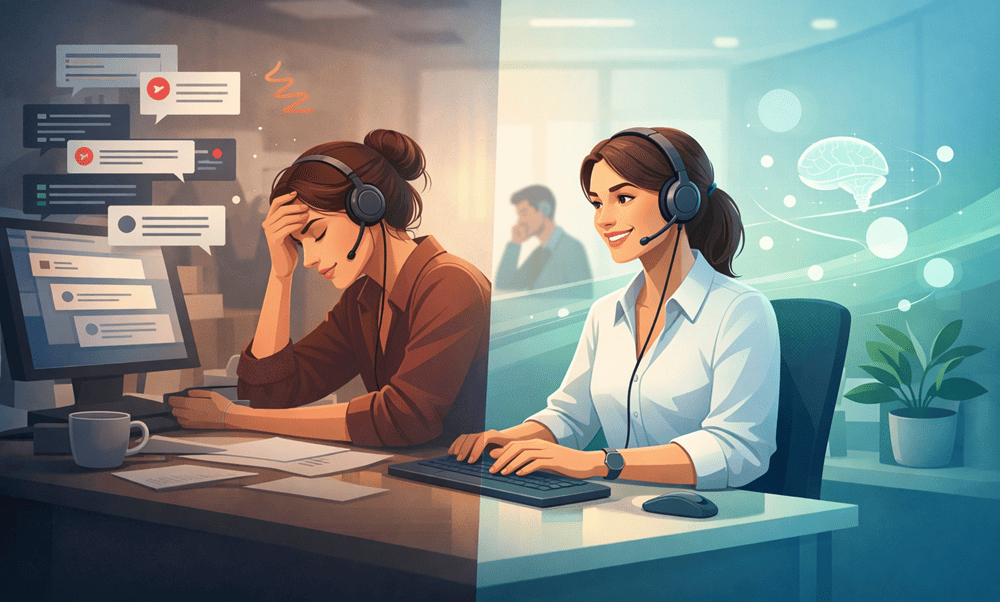
Call center stress is now one of the most cited contributors to employee exhaustion. Agents are expected to stay calm and empathetic regardless of customer behavior, system outages, or internal constraints. Over time, this constant emotional regulation leads to emotional labor at work, a hidden strain that drains mental energy faster than most leaders realize.
For many organizations, customer support has become one of the most high turnover roles. Employees leave not because they lack skill, but because the job becomes mentally unsustainable.
The Human Cost of Frontline Burnout
Burnout doesn’t always show up as dramatic breakdowns. More often, it appears quietly—reduced patience, emotional detachment, slower response times, and rising absenteeism. Frontline employee burnout affects not only individual wellbeing, but also team culture and customer satisfaction.
When stress goes unmanaged, it frequently turns into workplace anxiety. Employees begin to dread shifts, feel constantly “on edge,” and struggle to recover between interactions. This creates a vicious cycle: stressed agents deliver poorer experiences, which leads to more escalations, which increases stress even further.
Over time, support team wellbeing declines, engagement drops, and CX leaders are left firefighting attrition instead of improving service quality.
AI Corporate Video Maker
Why Traditional Solutions Are Falling Short
Many organizations rely on generic wellness initiatives—annual workshops, meditation apps, or EAPs that employees rarely use. While well-intentioned, these approaches often fail frontline teams for one key reason: they aren’t available when stress actually happens.
Customer support stress is real-time. It happens during difficult calls, after abusive conversations, or when performance metrics clash with human limits. Static programs can’t intervene in the moment, and managers often don’t have visibility into who is struggling until it’s too late.
This is where AI for frontline workers offers a fundamentally different approach.
How AI Is Changing Burnout Prevention in CX Teams
AI-powered mental wellbeing platforms are designed to meet employees where stress occurs—during the workday, not after it. Instead of replacing human support, AI acts as an always-available layer of care that complements managers and HR teams.
One of the most impactful shifts is real-time stress support. AI tools can detect early signs of overload through behavior patterns, usage signals, or self-reported check-ins, and offer immediate coping strategies before stress escalates.
Unlike traditional programs, these tools are private, stigma-free, and accessible in the flow of work—making them far more likely to be used by frontline employees.
Personalized Support at Scale
Every support agent experiences stress differently. Some struggle with angry customers, others with repetitive tasks or performance pressure. AI enables personalized interventions that adapt to individual needs instead of applying one-size-fits-all solutions.
Modern workplace mental health tools can offer guided micro-coaching, emotional regulation exercises, or short recovery prompts tailored to the moment. Over time, these small interventions help employees build resilience without disrupting productivity.
This approach is especially powerful when paired with AI-powered coaching, which supports emotional skill-building, communication confidence, and stress management continuously—not just during formal training sessions.
The Business Impact of Supporting Mental Wellbeing
Reducing burnout isn’t just a people-first decision—it’s a business imperative. Burned-out support teams drive higher costs through attrition, recruitment, training, and lost customer loyalty.
Organizations that invest in proactive mental wellbeing see measurable improvements in engagement, consistency, and customer satisfaction. An integrated employee engagement platform that includes mental health support helps leaders identify trends early, support teams proactively, and create psychologically safer environments.
Over time, these systems contribute to long-term burnout reduction strategies that are embedded into daily operations, rather than treated as temporary fixes.
Building Sustainable CX Teams With AI
The future of customer support depends on sustainability. As automation handles routine tasks, human agents are increasingly left with the most emotionally complex interactions. Without proper support, this imbalance will continue to accelerate burnout.
This is where AI for mental health wellbeing becomes a strategic asset. By providing continuous, confidential, and adaptive support, AI helps organizations protect their most valuable CX resource: their people.
Rather than reacting to burnout after employees disengage or leave, AI enables prevention—supporting emotional health before it turns into exhaustion.
Moving From Burnout to Resilience
Customer support burnout isn’t a sign of weak employees. It’s a signal that the system needs to evolve. CX teams operate under constant pressure, and expecting resilience without support is no longer realistic.
Organizations that prioritize mental wellbeing through intelligent, scalable tools will not only retain talent—they’ll build stronger, more adaptable customer experience teams. With the right AI-driven approach, stress doesn’t have to break CX teams. It can be managed, reduced, and transformed into sustainable performance.