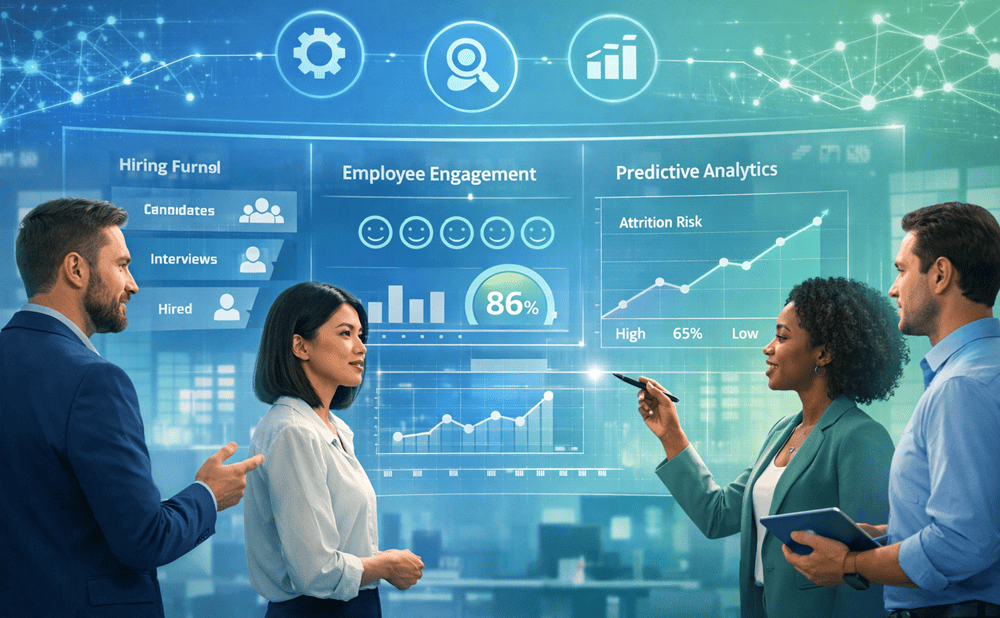
Workplace management is changing fast. Traditional HR systems that rely on manual processes and reactive decisions are no longer enough. Today, organizations are turning to autonomous HR AI to handle complex people operations with speed, accuracy, and consistency.
From hiring to retention, AI is no longer just a support tool, it is becoming a decision-making partner. This shift is redefining how companies manage their workforce, improve employee experiences, and scale operations efficiently.
In this blog, we’ll break down how autonomous HR works, why it matters, and how forward-thinking organizations are using it to stay competitive.
What Is Autonomous HR AI?
At its core, autonomous HR AI refers to systems that can manage HR processes with minimal human intervention. These systems use machine learning, data modeling, and automation to make decisions across the employee lifecycle.
Unlike basic automation tools, autonomous HR systems don’t just execute tasks, they analyze patterns, predict outcomes, and recommend actions.
This is where AI-powered people management becomes truly impactful. Instead of relying on static rules, organizations can use dynamic systems that adapt to workforce needs in real time.
Why Businesses Are Moving Toward Autonomous HR
HR leaders are under pressure to do more with less, faster hiring, better engagement, and improved retention. Autonomous systems help meet these demands by reducing manual workload and improving decision quality.
A recent industry report by Deloitte found that over 60% of enterprises are already investing in AI-driven HR technologies, with a strong focus on automation and analytics.
Here’s why the shift is happening:
- Growing workforce complexity across remote and hybrid models
- Increased demand for personalized employee experiences
- Need for data-backed HR decisions instead of intuition
- Rising operational costs in traditional HR functions
These challenges are pushing companies toward HR automation with AI to build more responsive and scalable systems.
Key Capabilities of Autonomous HR Systems
Autonomous HR platforms combine several technologies to deliver end-to-end workforce management. These capabilities go beyond simple task automation.
1. Intelligent Hiring and Screening
AI systems can scan thousands of resumes, identify top candidates, and even predict job fit based on historical hiring data. This improves speed and reduces bias.
This is a major step forward in AI talent lifecycle management, where hiring becomes more precise and data-driven.
2. Predictive Workforce Insights
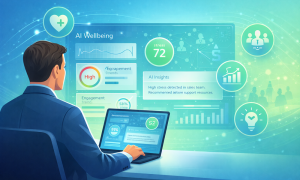
Using predictive HR analytics, companies can forecast attrition, identify burnout risks, and plan workforce needs in advance.
For example, AI models can flag employees likely to leave within the next six months based on engagement patterns, workload, and feedback data.
Organizations already using people analytics solutions are seeing better retention and improved workforce planning accuracy.
3. Personalized Employee Experience
Modern employees expect more than just salaries—they want meaningful work experiences. AI systems can tailor engagement strategies based on individual preferences and behaviors.
This is where AI employee experience platforms play a key role. They can recommend learning paths, suggest wellness interventions, and even automate feedback collection.
Companies investing in AI for employee engagement often report higher satisfaction scores and reduced absenteeism.
4. Automated HR Operations
Routine tasks like payroll processing, leave management, and compliance tracking can be handled entirely by AI HR automation tools.
This reduces human error and frees HR teams to focus on strategic initiatives rather than administrative work.
Many organizations see this as a core part of their AI HR transformation journey.
How Autonomous HR Impacts the Employee Lifecycle
Autonomous HR is not limited to one function, it spans the entire employee journey.
Here’s a simple breakdown:
| Stage | Traditional HR | Autonomous HR AI |
| Hiring | Manual screening | AI-driven candidate matching |
| Onboarding | Static processes | Personalized onboarding journeys |
| Engagement | Surveys & guesswork | Real-time sentiment tracking |
| Performance | Annual reviews | Continuous AI insights |
| Retention | Reactive actions | Predictive interventions |
This approach aligns closely with AI-driven employee lifecycle management, where every stage is optimized using data.
Real-World Example: Autonomous HR in Action
A global IT company implemented an intelligent workforce platform to manage over 50,000 employees. Within one year, they achieved:
- 30% reduction in hiring time
- 25% improvement in employee engagement scores
- 20% decrease in attrition
The system used intelligent workforce management systems to track performance, predict risks, and automate HR workflows.
This is a clear sign that autonomous HR is not just a concept—it’s already delivering measurable results.
Benefits of Autonomous HR AI
Organizations adopting autonomous HR systems are seeing both operational and strategic gains.
- Faster decision-making with real-time insights
- Reduced administrative workload for HR teams
- Improved employee satisfaction through personalization
- Better compliance and risk management
- Scalable HR operations across global teams
These outcomes are driving broader Workplace digital transformation across industries.
Challenges to Consider
While the benefits are clear, implementing autonomous HR AI comes with its own challenges.
1. Data Quality and Integration
AI systems rely heavily on accurate data. Poor data quality can lead to incorrect insights and decisions.
2. Change Management
Employees and HR teams may resist adopting AI-driven systems due to lack of trust or understanding.
3. Ethical Concerns
Bias in AI models and data privacy issues must be carefully managed.
Organizations exploring AI for talent management should ensure transparency and fairness in their systems.
The Role of Smart HR Decision Systems
One of the most powerful aspects of autonomous HR is its ability to support decision-making.
Smart HR decision systems analyze multiple data points—performance metrics, engagement levels, and market trends—to recommend the best course of action.
For example:
If employee engagement drops in a specific team, the system can suggest targeted interventions such as workload adjustments or manager coaching.
This level of intelligence helps HR leaders move from reactive problem-solving to proactive planning.
What the Future Looks Like
The next phase of HR will likely involve fully autonomous ecosystems where AI handles most operational decisions, while humans focus on strategy and culture.
We can expect:
- Deeper integration of AI across all HR functions
- More advanced predictive capabilities
- Increased use of conversational AI for employee support
- Stronger focus on employee wellbeing and mental health
As AI-powered people management continues to evolve, organizations that adopt early will have a clear advantage.
Getting Started with Autonomous HR
If your organization is considering autonomous HR AI, start with a phased approach:
- Identify repetitive HR processes that can be automated
- Invest in reliable AI HR automation tools
- Build a strong data infrastructure
- Train HR teams to work alongside AI systems
- Continuously monitor and refine AI models
This ensures a smoother transition and better long-term outcomes.
Final Thoughts
Autonomous HR is not about replacing human teams—it’s about making them more effective. By combining human judgment with AI capabilities, organizations can create smarter, more responsive HR systems.
The shift toward autonomous HR AI is already underway. Companies that embrace it now will be better prepared to manage future workforce challenges, improve employee experiences, and drive sustainable growth.
In a world where talent is the biggest competitive advantage, smarter HR systems are no longer optional—they’re expected.