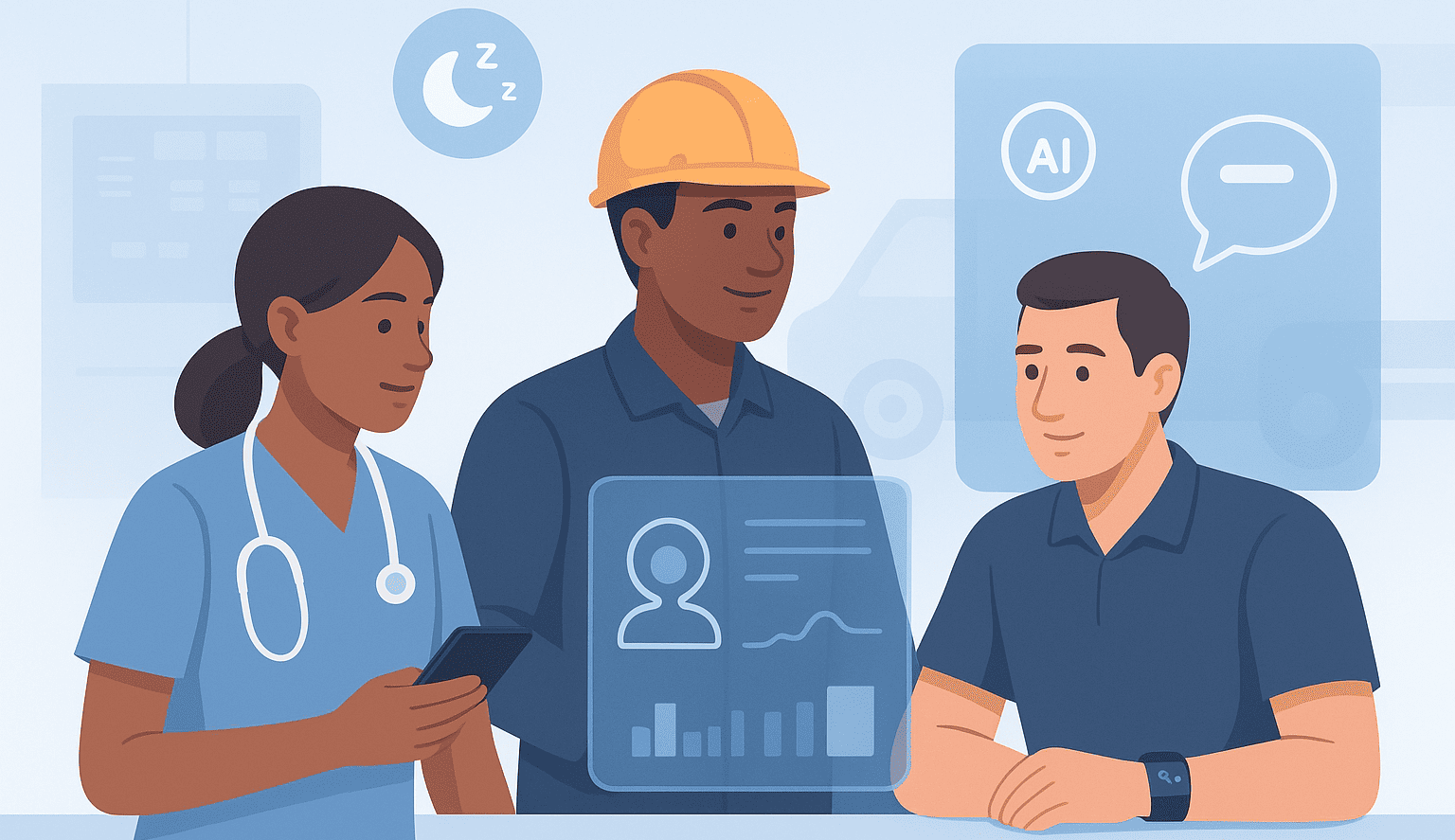
Shift worker wellbeing is fast becoming a critical concern for industries that rely on round-the-clock operations from manufacturing and healthcare to logistics, hospitality, and oil and gas. Irregular hours, disrupted sleep cycles, and long overnight shifts can have lasting effects on physical and mental health.
Today, AI wellness tools are stepping in to help employers protect their workforce from burnout, fatigue, and long-term stress making 24/7 jobs more sustainable and humane.
The Reality of Shift Work Fatigue
Working night shifts or rotating schedules interferes with the body’s natural circadian rhythm the internal clock that regulates sleep and alertness. According to the CDC, nearly 15 million Americans work night or rotating shifts, and more than 60% report fatigue-related performance issues.
Common issues among shift workers include:
- Difficulty staying alert during late hours
- Chronic sleep deprivation
- Mood fluctuations and irritability
- Increased risk of accidents and errors
- Higher likelihood of long-term health issues like obesity and cardiovascular disease
When fatigue becomes part of the job description, productivity drops, absenteeism rises, and employee turnover follows. That’s where AI-driven wellness systems can help.
How AI Supports Shift Worker Wellbeing
Modern AI for wellbeing solutions combine data analytics, predictive modeling, and conversational support to detect fatigue and stress early. Here’s how it works:
| AI Capability | Benefit for Shift Workers |
| Real-time voice and mood analysis | Detects early signs of fatigue and emotional exhaustion |
| Personalized rest recommendations | Suggests micro-breaks or mindfulness sessions based on fatigue levels |
| Adaptive scheduling insights | Helps HR plan shifts that balance rest and performance |
| Predictive fatigue models | Identifies workers most at risk and prevents overwork |
By analyzing behavioral data and biometric patterns, AI wellness 24/7 job systems provide personalized guidance that fits each employee’s work rhythm. This kind of continuous, data-driven feedback can make night shifts far safer and more balanced.
Night Shift Stress AI: Smart Interventions that Work
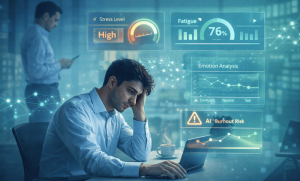
Night shift stress AI uses speech patterns, tone changes, and response times to detect signs of stress or burnout during long shifts. For example, an AI-powered fatigue assistant might remind a call center worker to stretch, or a nurse to pause for hydration during an extended night duty.
In manufacturing and oil & gas sectors, such systems can even flag potential safety risks caused by drowsiness. That’s where solutions like AI for oil and gas workers are becoming essential, they monitor physiological signals and ensure that high-risk jobs are performed only when the worker is mentally alert.
These small, real-time nudges have shown measurable results:
- Up to 30% reduction in fatigue-related incidents
- 40% better engagement in wellbeing initiatives
- Significant drop in unplanned absences
Fatigue Prevention Through Data-Backed Coaching
An AI stress reduction platform goes beyond reminders it learns from past behavior. If a worker tends to hit peak fatigue around 3 AM, the AI can schedule short mindfulness or breathing breaks before that window.
Pairing this with AI meditation for better sleep allows workers to recover faster between shifts. Some companies integrate guided audio sessions, using AI coaching to deliver short, relaxing voice interactions tailored to each worker’s mental state.
Together, these technologies act as a digital “wellbeing companion” — always present, always adapting.
Wellbeing Support Around the Clock
Traditional wellness programs often fall short for 24/7 environments because they’re built for 9-to-5 employees. But wellbeing support round-the-clock powered by AI doesn’t depend on office hours.
- A factory worker at 2 AM can check in with an AI voice assistant for breathing exercises.
- A nurse finishing a night shift can receive personalized recovery guidance.
- A logistics driver can get gentle fatigue alerts through smart wearables.
Incorporating these AI tools into a corporate wellness program ensures continuous coverage — not just during office hours, but whenever employees need help most.
Business Impact of Prioritizing Shift Worker Wellbeing
Supporting shift worker wellbeing isn’t just about doing what’s right — it’s also good for business. Studies by McKinsey show that companies investing in digital health tools for shift employees see:
- 25–35% drop in absenteeism
- 20% increase in productivity
- Improved employee retention rates across high-stress departments
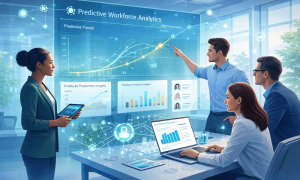
When combined with employee wellbeing solution platforms, these results amplify. Businesses that use AI-driven insights can forecast stress patterns, optimize shift rotations, and build data-informed wellness strategies.
Moreover, integrating workplace mindfulness and short guided AI meditation tools for night workers supports emotional balance, improving concentration and reducing workplace accidents.
Real-World Example: AI Wellness in Healthcare
Healthcare professionals often face the toughest shift schedules. One large hospital network implemented AI wellness 24/7 jobs technology that analyzed staff fatigue data through wearable devices.
Within three months:
- Night shift incidents dropped by 18%
- Reported stress levels declined by 22%
- Staff satisfaction scores improved noticeably
AI’s ability to provide real-time coaching AI and predictive fatigue management proved invaluable — not as a replacement for human empathy, but as an enabler of healthier, safer working conditions.
Building the Future of 24/7 Wellbeing
For business owners, HR teams, and wellness program leaders, the message is clear: AI-powered fatigue prevention shift work tools are no longer optional they’re becoming essential infrastructure for the modern workforce.
By weaving AI for wellbeing into your corporate wellbeing AI strategy, you can create a sustainable environment for your night shift teams one that supports both mental resilience and operational efficiency.
In an era where productivity often depends on stamina, smart employers know that a well-rested worker is a safer, happier, and more effective one.
Key Takeaways
| Insight | Impact |
| Shift worker fatigue is one of the biggest hidden costs in 24/7 operations | Affects safety, retention, and performance |
| AI can detect and prevent fatigue before it causes harm | Uses predictive analytics and behavior data |
| Continuous wellbeing support improves engagement | Enables recovery and motivation at any hour |
| Investing in AI wellness tools boosts ROI | Enhances productivity and reduces absenteeism |
In short: AI isn’t just automating work, it’s humanizing it. By addressing fatigue and supporting emotional health in real time, AI wellness systems redefine what it means to care for shift workers in a truly 24/7 economy.