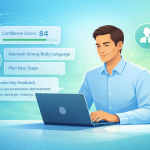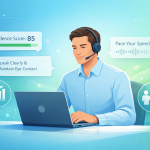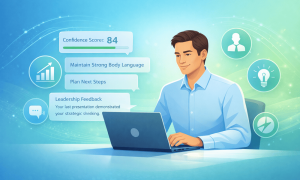
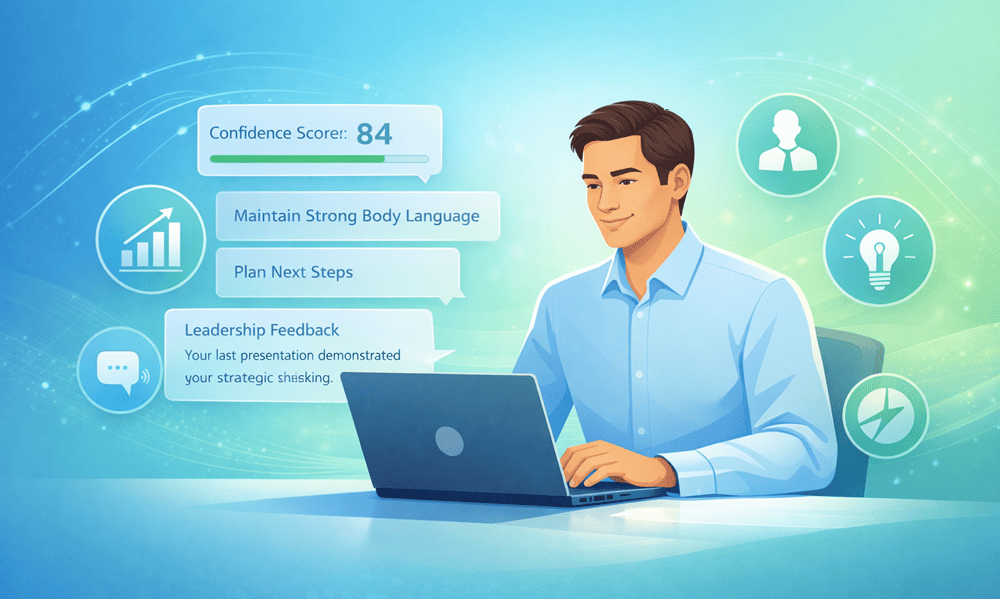
Employee confidence plays a quiet but powerful role in business performance. Professionals who trust their abilities are more likely to share ideas, lead conversations, and handle challenges calmly. Yet many organizations still struggle with low employee confidence, especially in fast-changing work environments.
This is where AI for employee confidence building is becoming a valuable workplace solution. Modern artificial intelligence platforms can analyze communication behavior, guide employees through personal development exercises, and provide ongoing coaching that improves professional self-belief.
Companies across industries are now investing in AI-driven learning tools to support employees who want to improve communication, leadership readiness, and overall workplace presence.
Why Employee Confidence Matters More Than Ever
Confidence influences how employees contribute during meetings, interact with clients, and approach leadership opportunities. When confidence is low, employees may hesitate to speak up or take ownership of projects.
Research from the Harvard Business Review shows that employees who feel psychologically confident are significantly more likely to share ideas and participate in team discussions.
For business leaders, this means confidence directly affects innovation and collaboration. Organizations that prioritize employee development often invest in structured training programs and AI coaching for professionals to help employees build these skills consistently.
The shift toward hybrid work and digital collaboration has also increased the need for structured support tools that guide employees in communication and personal development.
What Is AI for Employee Confidence Building?
AI for Employee Confidence Building refers to digital platforms that use artificial intelligence to help professionals strengthen self-belief, communication ability, and leadership readiness.
These platforms often combine behavioral science with machine learning to provide employees with personalized insights about their performance. Instead of relying only on annual training sessions, employees receive real-time coaching and continuous improvement suggestions.
Many companies now integrate these systems as part of broader AI mental wellbeing solutions designed to support both emotional health and professional growth.
Typical features of confidence-building platforms include:
| Feature | Purpose | Business Benefit |
| Communication analysis | Evaluates speech clarity and tone | Improves presentation skills |
| Behavioral feedback | Identifies confidence gaps | Encourages self-awareness |
| AI coaching modules | Provides guided training exercises | Supports ongoing learning |
| Confidence analytics tools | Tracks improvement over time | Helps HR measure progress |
These capabilities allow organizations to develop talent more efficiently while giving employees the guidance they often lack in traditional training environments.
How AI Coaching for Confidence Works
Traditional coaching usually depends on human mentors who meet with employees periodically. While this approach is helpful, it can be difficult to scale across large teams.
AI coaching for confidence solves this challenge by providing personalized guidance through digital platforms. Employees interact with AI-powered systems that analyze communication patterns, behavior signals, and performance data.
These platforms can suggest small improvements that make a big difference over time, such as:
- Speaking more clearly during presentations
- Adjusting tone when addressing colleagues
- Structuring ideas before important meetings
- Improving body language during virtual conversations
Organizations that implement these systems often combine them with AI soft skills training programs to strengthen interpersonal communication across teams.
AI Communication Coaching and Workplace Confidence
Communication is one of the strongest indicators of professional confidence. Employees who express ideas clearly tend to earn more trust from managers and colleagues.
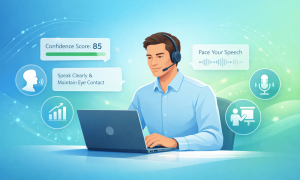
This is why AI communication coaching has become a popular feature in many digital learning platforms. AI systems can evaluate speech pace, clarity, and engagement while providing instant feedback to the user.
For example, a platform may record a presentation rehearsal and highlight areas where the speaker uses too many filler words or speaks too quickly.
These insights support broader initiatives around Workplace performance growth, helping employees become more effective communicators and contributors.
Digital Tools That Support Workplace Self-Esteem
Employee confidence is not only about public speaking or leadership. It also relates to how individuals perceive their own abilities and progress.
Organizations are now adopting workplace self-esteem tools that combine coaching exercises, progress tracking, and reflective learning methods. These tools encourage employees to review achievements, identify skill gaps, and set realistic improvement goals.
Here are some common capabilities found in these platforms:
- Guided self-reflection exercises
- Communication practice modules
- Confidence analytics dashboards
- AI-driven career development suggestions
Many of these features rely on AI-based behavioral insights to understand patterns in employee performance and recommend targeted improvements.
How AI Behavioral Development Platforms Strengthen Leadership Skills
Confidence is closely tied to leadership readiness. Employees who believe in their abilities are more likely to take initiative and guide others.
An AI behavioral development platform helps organizations identify future leaders by analyzing behavioral signals such as communication style, decision-making patterns, and collaboration habits.
These insights help HR teams create development pathways for employees who show leadership potential. Many organizations are now connecting these platforms with Leadership development with AI initiatives to prepare professionals for management roles earlier in their careers.
When employees receive structured coaching, they often gain confidence faster because they understand how to improve specific skills.
Measuring Confidence with Data and Analytics
One advantage of modern learning technology is the ability to measure personal development through data. Confidence analytics tools help organizations track how employees grow over time.
These systems often measure indicators such as communication improvement, presentation performance, and engagement during meetings.
A simple example of measurable confidence metrics might include:
| Confidence Indicator | Measurement Method |
| Presentation clarity | Speech analysis software |
| Meeting participation | Engagement tracking |
| Leadership readiness | Behavioral pattern analysis |
| Communication improvement | AI feedback scores |
By reviewing these metrics, organizations can identify areas where employees need additional support and refine Employee empowerment strategies that strengthen workplace performance.
AI Personal Development Software in Corporate Learning
Corporate learning programs are evolving quickly. Instead of relying solely on classroom training, companies now use AI personal development software to create continuous learning experiences.
These platforms deliver personalized exercises that employees can complete at their own pace. For example, a professional might receive short coaching prompts before an important presentation or after a challenging meeting.
The goal is to make development part of everyday work rather than a separate activity. When learning happens in small, consistent steps, employees often feel more confident applying new skills.
Organizations that implement AI-driven learning environments also strengthen AI-based behavioral insights, allowing them to understand how employees develop over time.
The Role of Digital Leadership Confidence Training
Leadership confidence is especially important in mid-level management roles where professionals must guide teams while communicating with senior executives.
Digital leadership confidence training programs help managers strengthen these abilities using AI-powered coaching and scenario simulations.
These platforms may present realistic workplace situations, such as delivering feedback to a team member or leading a strategic meeting. The AI system evaluates the manager’s response and suggests improvements.
Companies that adopt these tools often see measurable improvements in communication clarity, leadership presence, and team collaboration.
Real-World Business Impact
Organizations that invest in AI for Employee Confidence Building often notice improvements across multiple areas of business performance.
Employees who feel confident tend to:
- Share ideas more openly during meetings
- Communicate more effectively with clients
- Take initiative on new projects
- Demonstrate stronger leadership potential
A technology consulting firm that implemented AI coaching tools reported a 28% increase in employee engagement scores within one year. Managers also observed higher participation during strategy meetings and stronger collaboration across departments.
These outcomes demonstrate that confidence development is not just a personal benefit—it also supports organizational growth.
The Future of AI-Driven Confidence Development
As AI technology continues to advance, workplace coaching platforms will become more personalized and interactive. Future systems may include emotion recognition, adaptive coaching models, and real-time communication guidance during meetings.
These innovations will help organizations create learning environments where employees feel supported rather than evaluated.
For business leaders, investing in AI for Employee Confidence Building is quickly becoming a strategic decision rather than a training experiment. Companies that provide structured coaching tools empower employees to grow professionally while contributing more confidently to business goals.
When confidence becomes part of workplace culture, organizations benefit from stronger communication, better leadership development, and more engaged teams.