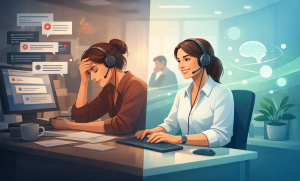
In many industries, employees face growing workloads, longer hours, and tighter deadlines. This is not only a productivity issue, it’s a health issue. According to global estimates, long working hours contributed to roughly 745,000 deaths in 2016 from stroke and heart disease.
Moreover, heavy workloads are among the most common triggers of workplace stress. In one recent survey, around 23.7% of employed people identified heavy workload as the cause of high or very high work-related stress, making it a leading concern across fields.
Burnout, defined by exhaustion, reduced performance, and mental health strain now affects a significant portion of the workforce. Some reports in 2025 estimate burnout prevalence as high as 66%. Forbes
Given these realities, organisations cannot afford to treat workload balancing as optional. Without smart systems, burnout risk climbs — productivity drops, turnover rises, and workforce wellbeing suffers.
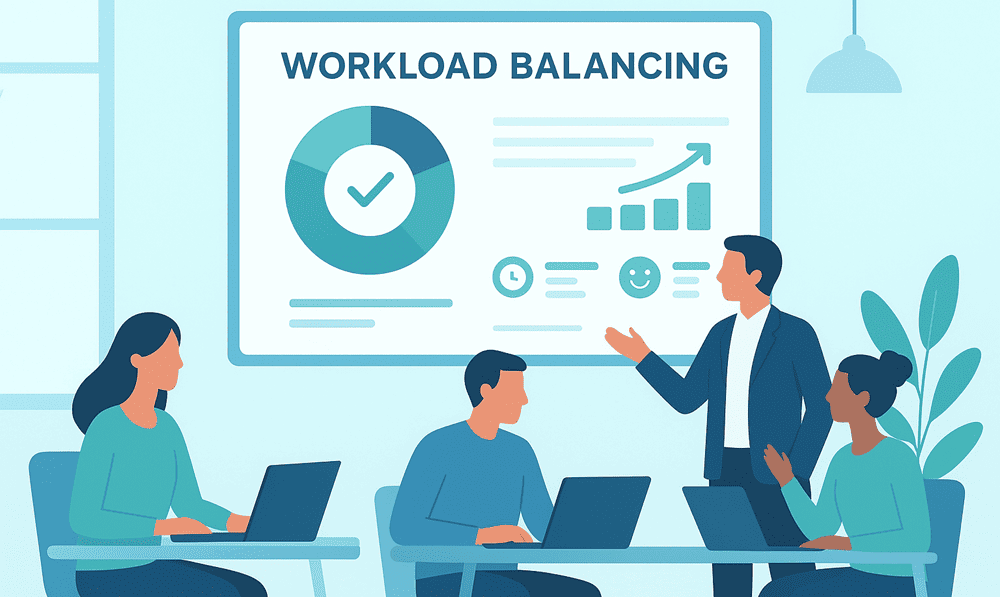
This is where AI-enabled workload balancing comes into play: aligning tasks smartly, scheduling effectively, and keeping pace with employee capacity long before stress becomes burnout.
What Is AI-Enabled Workload Balancing?
AI-enabled workload balancing refers to the use of intelligent software powered by machine learning or algorithms to:
- analyze workload distribution across teams
- detect overload or stress risk ahead of time
- reassign or reschedule tasks dynamically to avoid overburdening any individual or team
- monitor cumulative work hours, upcoming deadlines, and individual capacity
- provide managers or HR with actionable dashboards and recommendations
In short: it helps ensure work is distributed fairly, deadlines are realistic, and employees aren’t stretched beyond healthy limits — supporting both productivity and mental health.
A recent paper observed that AI tools can significantly reduce administrative and cognitive burdens that contribute to burnout.
In other words, AI isn’t just automating tasks it’s enabling smarter workload management that supports human wellbeing.
The Cost of Ignoring Workload Imbalance & Burnout
When workload balancing is neglected, companies often see negative outcomes — for both employees and business metrics. Some of these risks include:
- Reduced performance and productivity: A 2021 study found that higher stress correlated strongly with lower productivity and reduced job satisfaction.
- Increased absenteeism, turnover, and errors: Chronic stress and burnout lead to mistakes, missed deadlines, sick leaves, and people leaving — all costly for organisations.
- Negative impact on mental health and physical well-being: Overwork and stress are linked to anxiety, depression, sleep problems, heart risk, and lower long-term wellness.
As workforce expectations grow and work environments get more demanding, ignoring workload balance is no longer sustainable.
How AI Helps: Key Features & Benefits of Workload Management Tools
AI-powered workload balancing offers several benefits for modern workplaces. Among the most important:
📊 Data-Driven Task Allocation & Scheduling
AI systems can monitor project loads, deadlines, and team bandwidth to allocate tasks intelligently. They may flag overload for a particular team or individual and suggest rescheduling or redistribution. This helps avoid bottlenecks and excessive burden before problems emerge.
Tools like prediction-based scheduling help distribute work more evenly — especially in environments with irregular workloads, such as shift-based jobs or project-driven teams. This aligns with what many employers now expect from AI for HR Check-Ins systems.
🔄 Early Detection of Burnout Risk
By tracking cumulative work hours, patterns (e.g., late nights, weekend work, repeated overtime), and output pace, AI can flag risk indicators — high workload, stress signals, or unsustainable pace — before burnout sets in. This gives leaders time to step in, reassign work, or offer support. Several vendors now offer features under the umbrella of AI Stress Monitoring.
📈 Better Productivity Without Compromising Employee Wellbeing
Balanced workloads mean people aren’t constantly overwhelmed or exhausted. As a result, employees tend to be more focused, provide higher quality work, and maintain better decision-making and creativity. Studies show that stress and high workload impair concentration and efficiency — balanced workloads reverse that trend.
🧑💼 Support for Leadership & HR Decision-Making
For managers and HR leaders, AI dashboards provide an overview of team workload, stress risk, and capacity. This empowers informed decision-making — balancing resource allocation, scheduling shifts, and redistributing tasks proactively. A robust AI wellbeing dashboard setup becomes a core part of corporate wellness strategy.
⚙️ Adaptable for Multiple Work Contexts
Whether you’re managing IT teams, manufacturing shifts, customer support, or hybrid/remote workforces — AI workload balancing adapts. It works across contexts, helping handle fluctuating demand, project bursts, or high-pressure deadlines without burning out employees. This approach mirrors effective strategies used in managing IT burnout with AI and broader resourcing practices.
How to Implement AI-Enabled Workload Balancing in Your Organisation
If you’re considering adopting workload balancing powered by AI, here’s a practical roadmap:
- Assess Current Work Patterns and Overload Risks
Start by gathering data — hours worked, overtime frequency, project loads, turnover, past stress/absence records. This baseline helps identify where balancing is most needed. - Choose the Right AI Tool or Platform
Look for solutions that offer task-allocation algorithms, load-monitoring dashboards, shift scheduling flexibility, and alerting features for overload or burnout risk. - Pilot on High-Risk Teams First
Begin with departments known for heavy workloads or high stress (e.g. customer service, operations, IT), monitor the impact, and collect feedback before scaling. - Combine with Human Oversight & Flexible Policies
AI should support not replace leadership judgment. Let managers review AI recommendations, adjust workloads manually if needed, and maintain flexibility. - Train Managers and Employees on Use & Purpose
Transparency is key. Explain to staff why the system is in place to protect wellbeing and maintain performance not to micromanage. - Monitor Metrics & Outcomes Over Time
Use anonymized data to monitor burnout risk, stress levels, absenteeism, turnover, and productivity. Over time, this helps validate the effectiveness of workload balancing. - Link to Broader Wellness Strategy
AI-enabled workload balancing works best when combined with regular wellness programs, check-ins, mental health support, and cultural commitment to employee wellbeing — complementing frameworks such as predictive burnout forecasting and AI coaching for leaders.
Case Example: What Real-World Benefit Looks Like
Imagine a mid-sized tech company with 120 employees across development, QA, operations, and support. Before AI adoption, the company experienced frequent burnout around major releases — long hours, late nights, elevated stress, and several resignations.
After deploying an AI-powered workload scheduling tool:
- The system flagged three teams for overload two weeks before a release — prompting management to reassign tasks and bring in temporary support.
- A dashboard highlighted individuals clocking excessive hours for two consecutive weeks — triggering manager check-ins and optional rest days.
- Overtime dropped by 42%; incidents of fatigue-related bugs decreased; and employee satisfaction improved in the next pulse survey.
While hypothetical, this scenario mirrors findings from industry reviews: AI task-optimisation tools helping to reduce burnout risk, improve performance, and enhance wellbeing.
Challenges & Things to Watch Out For
As effective as AI workload balancing can be, it’s not without challenges:
- Over-reliance on Algorithms — AI may misinterpret capacity or urgency; human judgment is still needed to manage priorities, urgent fixes, or unpredictable demands.
- Resistance from Employees or Leaders — Some may see AI scheduling as intrusive or undermining autonomy. Clear communication and transparency are essential.
- Data Privacy and Trust Issues — Monitoring workloads and patterns must respect privacy, anonymization, and ethical use of data.
- Need for Cultural Change — Tools alone don’t ensure balance — you need supportive policies, flexible work culture, and manager training.
- Not a Magic Fix — Workload balancing should be part of a broader wellbeing and mental health strategy, not the only lever.
Why Workload Balancing Is a Strategic Priority, Not Just a Wellness Perk
In today’s fast-changing workplace landscape, balancing workload isn’t a “nice-to-have” — it’s a strategic necessity. With rising burnout rates (reported up to 66% in 2025), growing health risks tied to long hours, and the heavy cost of turnover and stress-related productivity loss, sustainable workload management directly impacts a company’s bottom line.
By integrating AI-enabled workload balancing, companies gain:
- Smarter resource allocation and reduced risk of burnout
- Improved employee wellbeing and mental health outcomes
- Better productivity, quality, and reduced error rates
- Stronger retention and lower turnover costs
In essence balancing workload responsibly with AI support is not just an HR initiative. It’s a long-term business safeguard.
Conclusion: Building Resilience Through Smart Workload Management
Workload pressure, stress, and burnout are not inevitable by-products of modern work. With thoughtful use of AI, organisations can proactively manage load, protect mental health, and sustain high performance.
Workload balancing, powered by AI, offers a promising path forward helping businesses prioritise workload management and stress prevention, while boosting employee performance, productivity, and retention.
If you want to explore how such systems integrate with broader wellness tools or leadership frameworks and how to get started, stay tuned for our next post on building a complete AI-driven workplace wellness ecosystem.