Employee Assistance Programs have existed for decades, yet many HR leaders still struggle to answer a basic question: Are our EAPs actually helping employees?
Utilization rates alone rarely tell the full story. What matters more is understanding who is using support, when they need it, and why stress patterns rise across the organization. This is where EAP analytics powered by AI are changing how people leaders measure, improve, and scale mental health support.
Why Traditional EAP Reporting Falls Short
Most EAP reports focus on surface-level metrics—number of sessions used, hotline calls, or referrals made. While useful, these numbers don’t explain employee behavior or workplace conditions driving demand.
For example, low utilization might signal lack of trust, poor awareness, or misaligned services. High utilization could reflect effective access—or growing stress across teams. Without context, leaders are left guessing.
This is why modern organizations are turning toward AI-driven analytics within AI EAP platforms to move from static reporting to insight-driven decision-making.
What EAP Analytics Really Means Today
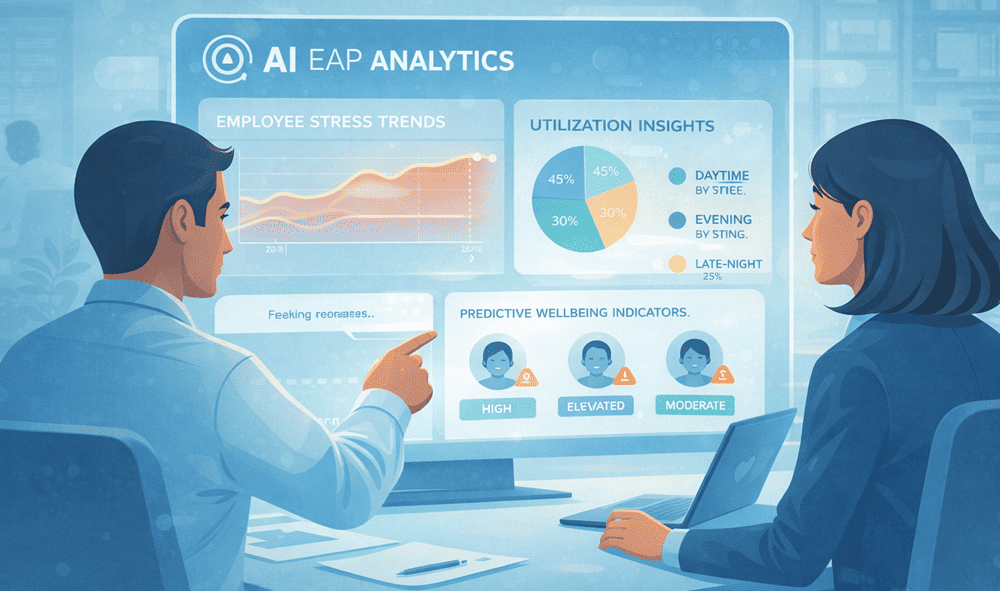
At its core, EAP analytics is the practice of turning anonymized employee interaction data into patterns HR teams can act on. AI enables this by connecting multiple data points over time instead of treating each interaction in isolation.
These systems look beyond counts to uncover mental health data insights such as emotional demand cycles, recurring stress triggers, and early risk signals across departments or roles.
The result is clarity—not surveillance—when implemented correctly.
From Utilization Reporting to Behavior Understanding
Traditional utilization reporting answers how much support is used. AI analytics answers how and why.
For instance, AI can reveal:
- Increased EAP engagement after organizational changes
- Spikes in support requests during certain project phases
- Repeated usage following manager feedback cycles
These insights help leaders connect mental health demand to workplace realities rather than treating wellbeing as a separate issue.
How AI Identifies Employee Behavior Trends
AI systems are particularly effective at detecting employee behavior trends that develop slowly and often go unnoticed.
By analyzing interaction timing, frequency, and topic clusters, AI can show patterns like:
- Late-night usage indicating workload pressure
- Repeated stress themes tied to specific roles
- Declining engagement in certain teams
When paired with an AI mental fitness platform, these insights allow organizations to respond before disengagement turns into burnout or attrition.
Workplace Stress Analysis Without Breaking Trust
One of the biggest concerns HR leaders have is privacy. Modern AI platforms address this by working with anonymized, aggregated data only.
Workplace stress analysis does not identify individuals. Instead, it highlights group-level patterns such as departments experiencing sustained emotional load or teams affected by constant urgency.
This allows leadership to address systemic issues rather than placing responsibility on individuals, reinforcing a healthier employee wellbeing strategy.
Predictive Insights: Moving From Reactive to Proactive
Perhaps the biggest shift AI brings to EAP analytics is prediction. Instead of waiting for employees to reach out, AI can flag early signals of rising stress.
Predictive wellbeing metrics may include:
- Increasing frequency of short interactions
- Emotional tone shifts over time
- Reduced engagement after high-pressure events
These signals help HR teams plan targeted interventions, policy adjustments, or manager support well before formal complaints or resignations appear.
How HR Teams Use EAP Analytics in Practice
When analytics are applied correctly, they become part of everyday people decisions.
HR leaders commonly use AI insights to:
- Adjust workload distribution during peak stress periods
- Support managers with coaching resources
- Improve timing and format of wellbeing programs
- Refine communication strategies during change
Many organizations also connect these insights with AI for mental health wellbeing initiatives to align technology, culture, and leadership behavior.
The Role of Mindfulness and Preventive Support
Analytics often reveal that stress builds gradually, not suddenly. This is where early interventions matter.
AI platforms frequently integrate short exercises, reflection prompts, or recovery nudges that reinforce workplace mindfulness before stress escalates into absenteeism or disengagement.
These micro-supports work because they appear at the right moment, not as generic wellness content.
A Simple Example: Analytics in Action
Consider a mid-size consulting firm that noticed rising EAP usage but stable productivity metrics. AI analytics revealed consistent emotional strain every Thursday evening tied to internal reporting deadlines.
Instead of expanding counseling hours, leadership adjusted timelines and added manager check-ins. Within two months, EAP demand normalized, and engagement scores improved.
This type of targeted response is only possible with insight-driven analytics supported by an AI wellness ecosystem.
Why Business Leaders Should Care About EAP Analytics
Mental health support is no longer a compliance checkbox. It directly affects performance, retention, and culture.
Organizations that use AI-driven EAP analytics gain:
- Better visibility into workforce health
- Lower long-term wellbeing costs
- Higher trust in support programs
- Stronger alignment between HR and business outcomes
Most importantly, leaders stop guessing and start acting with confidence.
What to Look for in an AI-Driven EAP Analytics Platform
Not all analytics tools are equal. HR leaders should prioritize systems that offer:
- Clear data governance and privacy controls
- Actionable insights, not raw dashboards
- Integration with existing wellbeing tools
- Trend analysis over time, not snapshots
Platforms that support these capabilities help organizations move from reporting to real change.
The Future of EAPs Is Insight-Led
As work becomes more complex and distributed, emotional strain will not disappear. What will change is how organizations respond.
AI-driven EAP analytics allow HR and people leaders to see patterns early, respond thoughtfully, and build support systems that actually fit how employees work today.
When insight replaces assumption, EAPs shift from underused benefits to strategic assets—strengthening both people and performance.