Employee wellbeing has become a boardroom priority. Over the past decade, organizations have realized that workforce health, stress management, and employee engagement are closely tied to productivity and long-term business performance. However, managing wellbeing across large teams can be difficult for HR leaders who already handle multiple strategic responsibilities.
This challenge has led to a new concept gaining attention among business leaders: the AI chief wellbeing officer.
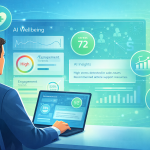
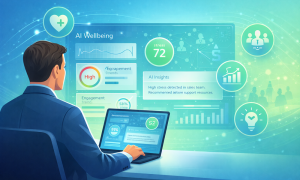
An AI-powered system that monitors workplace wellbeing, identifies risk signals, and recommends proactive support strategies can function as a digital executive partner. Instead of replacing HR leaders, an AI Chief Wellbeing Officer works alongside them to strengthen wellbeing programs through real-time data, behavioral insights, and continuous analysis.
For organizations pursuing AI-powered workplace transformation, this model offers a practical way to scale wellbeing initiatives across global teams.
Why Organizations Need a New Approach to Wellbeing Leadership
Corporate wellbeing programs traditionally rely on surveys, HR consultations, and occasional wellness initiatives. While these programs provide value, they often lack real-time insight into employee wellbeing trends.
A report from the World Health Organization estimates that depression and anxiety cost the global economy nearly $1 trillion each year in lost productivity. This statistic highlights why companies are exploring smarter solutions for workforce wellbeing.
An AI Chief Wellbeing Officer allows organizations to move from reactive programs to proactive wellbeing management. Instead of waiting for problems to surface, AI tools continuously analyze workplace data and identify early signals of stress, burnout, or declining engagement.
This shift supports modern Corporate wellbeing leadership, where executives focus on prevention rather than crisis response.
What Is an AI Chief Wellbeing Officer?
An AI Chief Wellbeing Officer is not a single tool but a collection of intelligent systems designed to monitor workforce health and guide organizational wellbeing strategy.
These systems combine machine learning, behavioral analytics, and HR technology to track patterns that influence employee wellbeing.
Typical capabilities include:
| Capability | How It Works | Organizational Benefit |
| AI organizational health monitoring | Tracks engagement, stress indicators, and productivity patterns | Identifies wellbeing risks early |
| Behavioral analytics | Detects changes in employee communication or workload trends | Improves HR decision-making |
| Wellbeing strategy insights | Suggests targeted interventions | Strengthens leadership planning |
| AI leadership support systems | Provides recommendations for executives | Enhances wellbeing governance |
Through these capabilities, AI becomes a strategic partner that supports HR leaders in building healthier workplaces.
This approach also aligns with broader discussions around AI governance in HR, where companies ensure responsible and transparent use of workplace data.
The Role of AI in Executive Wellbeing Strategy
Modern organizations need wellbeing strategies that adapt quickly to workforce needs. An AI executive wellbeing strategy allows leaders to base decisions on real-time information rather than periodic reports.
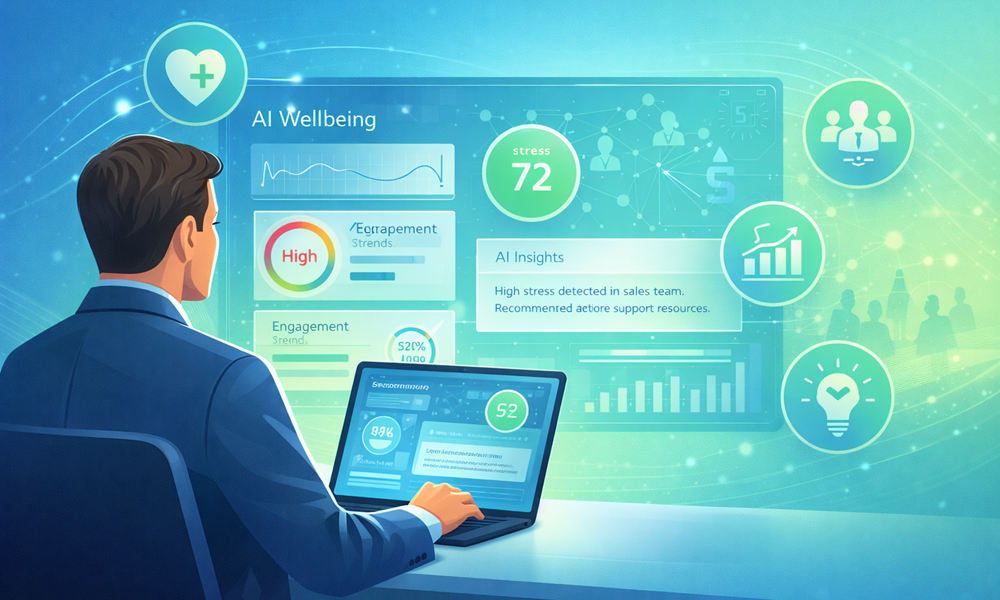
For example, AI systems can analyze indicators such as workload patterns, meeting frequency, communication tone, and employee engagement scores. When unusual trends appear, HR leaders receive alerts that help them take preventive action.
An AI Chief Wellbeing Officer may recommend actions such as:
- Adjusting workloads across departments
- Introducing targeted stress management resources
- Encouraging managers to check in with specific teams
- Deploying coaching tools for high-pressure roles
These insights help companies strengthen Workforce resilience with AI, ensuring teams remain productive while maintaining healthy work environments.
Autonomous Wellbeing Management in Modern Organizations
One of the most interesting aspects of the AI Chief Wellbeing Officer concept is autonomous wellbeing management. AI systems can monitor workplace conditions continuously without requiring manual analysis from HR teams.
This capability is particularly valuable for large enterprises where thousands of employees generate complex data signals every day.
An autonomous wellbeing management platform can analyze multiple sources of information, including employee feedback, productivity tools, and communication platforms.
With these insights, AI systems can automatically recommend actions such as:
- launching wellbeing initiatives in high-stress departments
- adjusting internal communication practices
- identifying teams at risk of burnout
These recommendations help organizations create a more responsive wellbeing framework while supporting broader Enterprise AI wellbeing platform strategies.
AI-Driven HR Leadership Tools for Strategic Decisions
HR leaders increasingly rely on data to guide workforce strategies. AI-driven HR leadership tools help decision-makers understand how wellbeing affects productivity, retention, and employee satisfaction.
Instead of reviewing separate HR metrics, executives can use integrated dashboards that combine performance, engagement, and mental health indicators.
These systems help organizations track patterns such as:
- rising stress levels in certain teams
- declining engagement in remote work environments
- leadership communication gaps
By identifying these patterns early, HR leaders can design interventions that protect employee wellbeing while maintaining operational efficiency.
This capability supports the growing discussion around the Future of AI in HR, where intelligent systems play a larger role in workforce strategy.
Key Features of a Digital Chief Wellness Officer Platform
Organizations exploring the digital chief wellness officer platform model often look for tools that combine analytics, coaching, and employee support resources.
A comprehensive AI wellbeing platform may include the following features:
- Real-time workforce wellbeing dashboards
- Predictive burnout detection algorithms
- AI-powered coaching tools for employees
- Leadership insights for HR executives
These platforms act as strategic support systems rather than simple monitoring tools. Their goal is to strengthen wellbeing culture across the organization.
Many companies now integrate these platforms with Executive mental health solutions designed specifically for leadership teams facing high decision pressure.
Strategic Wellbeing AI Solutions for Enterprise Growth
The introduction of an AI Chief Wellbeing Officer also reflects a broader shift toward strategic wellbeing planning.
Instead of treating wellbeing as an isolated HR initiative, companies are linking it directly to business outcomes. Research from Gallup suggests that highly engaged employees can improve profitability by up to 21 percent.
Strategic wellbeing AI solutions help organizations connect employee wellbeing metrics with performance outcomes.
For example:
| Wellbeing Metric | Business Impact |
| Employee stress levels | Productivity and absenteeism |
| Engagement scores | Team collaboration and innovation |
| Workload balance | Retention and burnout risk |
These insights help leaders understand how wellbeing investments influence long-term business performance.
AI Leadership Support Systems for HR Executives
HR leaders often carry the responsibility of designing and managing wellbeing initiatives. However, large organizations can generate more workforce data than human teams can analyze effectively.
AI leadership support systems address this challenge by providing continuous analysis and decision guidance.
These systems help HR executives:
- identify wellbeing trends across departments
- predict employee burnout risk
- measure the impact of wellbeing initiatives
By offering actionable insights, AI helps leaders build more effective wellbeing strategies while supporting ongoing AI-powered workplace transformation efforts.
Real-World Example: AI in Organizational Health Monitoring
Several global companies are already experimenting with AI-driven wellbeing management. Technology firms, consulting companies, and healthcare organizations often use AI to analyze employee engagement and workload patterns.
One multinational consulting firm introduced AI-based wellbeing monitoring across its workforce. Within the first year, the company reported a 20% improvement in employee engagement and a noticeable drop in burnout reports.
The AI system helped leadership teams identify departments experiencing heavy workloads and suggested changes in project allocation.
This demonstrates how AI organizational health monitoring can strengthen workforce stability and support long-term business goals.
The Future of the AI Chief Wellbeing Officer
As AI technology evolves, the concept of an AI Chief Wellbeing Officer will likely expand. Future systems may include emotional intelligence analysis, real-time stress detection, and advanced predictive models for employee wellbeing.
These innovations will help organizations move toward fully integrated wellbeing ecosystems where employee health, productivity, and leadership strategies are connected.
In this environment, HR leaders will continue to guide wellbeing strategy while AI systems provide continuous insights and operational support.
For corporate leaders seeking sustainable workforce performance, the AI Chief Wellbeing Officer represents a new model of leadership—one where technology strengthens human decision-making and ensures employee wellbeing remains a core business priority.