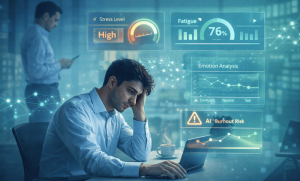
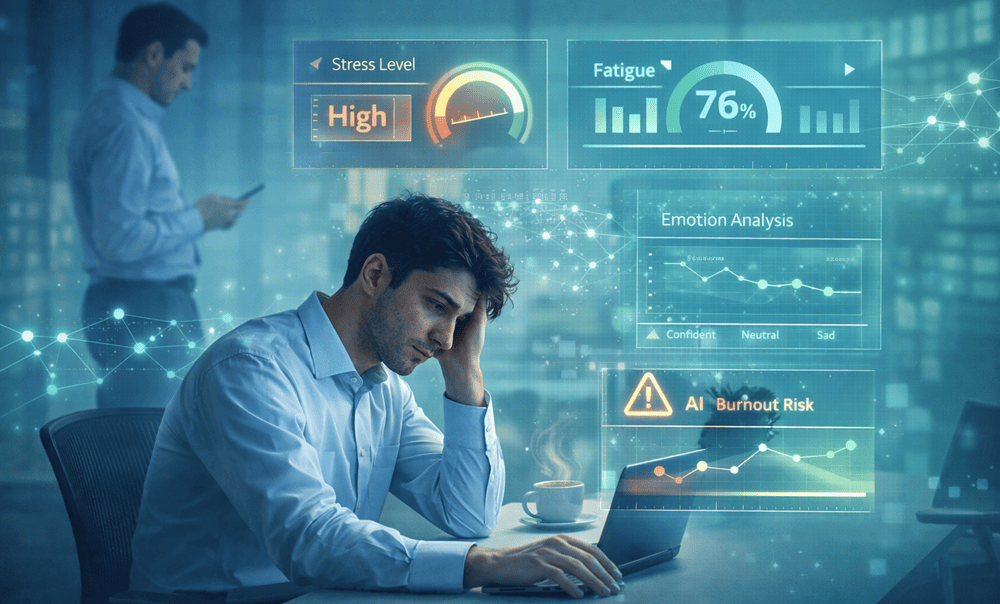
Burnout rarely announces itself. It builds quietly—through missed breaks, longer working hours, and emotional fatigue that often goes unnoticed. By the time managers recognize the signs, performance has already dropped, and employees may be considering leaving.
This is where AI burnout detection is changing the game. Instead of relying on surface-level observations, organizations can now identify early warning signs using data-driven insights.
In this blog, we’ll explore how AI uncovers hidden burnout risks, why traditional methods fall short, and how businesses can act before it’s too late.
Why Burnout Often Goes Unnoticed
Managers are expected to keep teams engaged and productive. But burnout doesn’t always look like disengagement. In many cases, high performers are the most affected—they continue delivering results while struggling internally.
A report by Gallup suggests that nearly 76% of employees experience burnout at least sometimes. Yet, most organizations fail to detect it early.
The challenge lies in visibility. Human observation alone cannot track subtle behavioral changes across large teams. This gap has led companies to adopt Employee mental health monitoring systems powered by AI.
What Is AI Burnout Detection?
AI burnout detection uses machine learning and behavioral analytics to identify patterns linked to stress and fatigue. These systems analyze data from multiple sources, such as:
- Work hours and overtime trends
- Communication patterns (emails, chats)
- Task completion rates
- Employee feedback and sentiment
Unlike manual tracking, AI can process these signals in real time, offering early burnout detection AI capabilities that help organizations act sooner.
How AI Identifies Invisible Burnout
AI doesn’t rely on a single indicator. Instead, it connects multiple signals to build a complete picture of employee wellbeing.
1. Behavioral Pattern Analysis
AI systems track changes in work habits over time. For example, a sudden increase in late-night activity or declining response times can signal stress.
This approach is often part of Workplace stress analytics, where patterns are analyzed continuously rather than at fixed intervals.
2. Sentiment and Communication Insights
Natural language processing (NLP) helps AI understand tone and sentiment in employee communication.
A shift from positive to neutral or negative language can indicate emotional fatigue. These insights power AI emotional intelligence systems, making it easier to detect hidden stress signals.
3. Predictive Risk Modeling
Using predictive employee fatigue analytics, AI can forecast burnout risks before they escalate.
For instance, if an employee shows a combination of increased workload, reduced engagement, and negative sentiment, the system can flag them as high risk.
Organizations using Mental health risk prediction AI are better equipped to take preventive action.
4. Continuous Monitoring Systems
AI doesn’t wait for quarterly surveys. It operates in real time, offering constant insights into employee wellbeing.
This is where workplace stress monitoring AI becomes valuable, helping HR teams stay informed without manual effort.
Traditional Methods vs AI-Driven Detection
Here’s how AI compares to conventional burnout detection approaches:
| Approach | Traditional HR | AI Burnout Detection |
| Data Source | Surveys & manager feedback | Real-time behavioral data |
| Frequency | Quarterly or annual | Continuous monitoring |
| Accuracy | Subjective | Data-driven insights |
| Action | Reactive | Predictive and proactive |
This shift highlights the growing importance of burnout prevention technology in modern workplaces.
Real-World Impact: What Companies Are Seeing
Organizations that adopt AI burnout detection are reporting measurable improvements.
A mid-sized tech firm implemented an AI-based system to monitor employee workload and engagement. Within six months, they observed:
- 22% reduction in employee attrition
- 18% improvement in productivity
- Higher participation in wellness programs
The system used AI employee wellbeing alerts to notify managers when employees showed early signs of burnout.
This allowed HR teams to implement Proactive wellbeing strategies before issues escalated.
Benefits of AI Burnout Detection
Companies investing in AI-driven burnout detection are seeing both human and business benefits:
- Early identification of burnout risks
- Better employee retention and satisfaction
- Reduced absenteeism and presenteeism
- Improved team performance and morale
- Data-backed decision-making for HR leaders
These benefits align closely with broader AI for workforce productivity goals.
Key Features to Look for in AI Burnout Tools
When evaluating solutions, organizations should focus on capabilities that go beyond basic tracking.
- Real-time monitoring and alerts
- Integration with existing HR systems
- Advanced AI mental health risk assessment models
- Customizable dashboards for HR and leadership
- Privacy-first design and ethical AI practices
These features are essential for effective AI burnout prevention strategies.
Ethical Considerations and Employee Trust
While AI offers powerful insights, it also raises important questions around privacy and transparency.
Employees need to understand how their data is being used. Organizations must ensure:
- Clear communication about AI systems
- Data anonymization wherever possible
- Compliance with privacy regulations
- Ethical use of insights without micromanagement
Building trust is key to successful adoption of workforce fatigue management tools.
The Role of Leadership in Burnout Prevention
AI can detect risks, but action still depends on leadership.
Managers play a critical role in responding to AI insights. This includes:
- Adjusting workloads
- Encouraging time off
- Offering mental health support
- Creating open communication channels
When combined with AI, these actions strengthen AI-driven employee wellbeing alerts and improve outcomes.
What the Future Holds
The future of burnout management is moving toward more personalized and predictive systems.
We can expect:
- More advanced predictive employee fatigue analytics
- Integration with wearable and health data
- Deeper insights into emotional and cognitive stress
- AI systems that recommend specific interventions
As these technologies evolve, AI burnout detection will become a standard part of workplace strategy.
Getting Started with AI Burnout Detection
For organizations exploring AI solutions, a phased approach works best:
- Identify key burnout indicators within your workforce
- Implement pilot programs using workplace stress monitoring AI
- Train HR teams to interpret AI insights
- Align AI findings with existing wellness programs
- Continuously refine models based on feedback
This approach supports long-term success and aligns with AI burnout prevention initiatives.
Final Thoughts
Burnout is no longer just an HR issue—it’s a business risk. Left unchecked, it impacts productivity, retention, and overall workplace culture.
AI burnout detection offers a smarter way to address this challenge. By identifying hidden patterns and predicting risks early, organizations can take meaningful action before burnout becomes visible.
In today’s fast-paced work environment, the ability to see what managers miss is not just helpful—it’s necessary.