Corporate leaders are under pressure to improve productivity while also protecting employee wellbeing. Burnout, disengagement, and stress-related absenteeism are no longer soft HR concerns—they directly affect business performance.
This is where corporate mental health analytics comes in. Instead of relying on occasional surveys or anecdotal feedback, companies can now use data and AI-driven insights to understand how their workforce is actually feeling.
Modern analytics tools combine employee feedback, behavioral signals, and organizational metrics to reveal patterns that leaders often miss. When used responsibly, these insights help organizations prevent burnout, strengthen engagement, and build healthier workplaces.
In this article, we’ll explore how corporate mental health analytics works, why companies are adopting it, and how HR leaders can use data to improve employee wellbeing.
What Is Corporate Mental Health Analytics?
Corporate mental health analytics refers to the use of data, AI, and behavioral insights to understand the emotional and psychological wellbeing of employees across an organization.
Instead of relying solely on annual surveys, organizations can analyze multiple signals such as:
- Employee sentiment surveys
- Workload patterns and overtime trends
- Communication behavior across teams
- Absenteeism and turnover indicators
- Feedback from wellbeing platforms
These signals create a broader view of workforce health. With AI wellbeing analytics, companies can identify patterns that suggest stress, burnout risk, or disengagement.
For example, if multiple teams report increasing workloads while engagement scores decline, leadership can intervene early instead of waiting until resignations start rising.
Many organizations already use people analytics AI for performance or hiring decisions. Extending that approach to mental health provides a clearer understanding of how workplace conditions impact employee wellbeing.
This approach is closely tied to people analytics powered by AI, which helps organizations interpret workforce behavior through intelligent data analysis.
Why Organizations Are Turning to Mental Health Data
Workplace wellbeing has become a business priority. According to the World Health Organization, depression and anxiety cost the global economy nearly $1 trillion each year in lost productivity.
Traditional wellness programs often fail because they rely on guesswork rather than measurable insights.
Corporate mental health analytics changes this by turning employee feedback into measurable indicators.
With workforce mental health data insights, leaders can see:
- Which departments are experiencing the highest stress levels
- Whether workloads are affecting morale
- How leadership changes impact employee wellbeing
- Early warning signs of burnout
These insights allow companies to act sooner and avoid costly workforce disruptions.
Many HR teams combine these insights with workplace mental health trends to understand how their internal data compares with broader industry patterns.
The Role of AI in Mental Health Analytics
Artificial intelligence plays a key role in modern workplace wellbeing platforms.
AI systems can process large amounts of employee data and detect subtle patterns that humans might miss. This capability makes AI wellbeing analytics especially useful for large organizations with thousands of employees.
AI can analyze data from several sources, including:
- Pulse surveys
- Wellness app interactions
- Workplace communication patterns
- HR metrics like absenteeism or turnover
Using these inputs, AI can generate predictive burnout analytics that identify employees or teams who may be approaching burnout.
Instead of reacting after problems occur, HR teams can implement early support programs.
Companies that adopt this approach often combine analytics with AI for workforce resilience, using digital coaching tools and support resources to address stress before it becomes a serious issue.
Key Metrics Used in Corporate Mental Health Analytics
Organizations typically track several indicators when building a corporate mental health analytics framework.
Below is a simplified overview of common metrics used by HR teams.
| Metric | What It Measures | Why It Matters |
| Stress Indicators | Employee self-reported stress levels | Detects early burnout risk |
| Workload Trends | Hours worked and task volume | Identifies pressure points |
| Engagement Scores | Employee motivation and morale | Indicates cultural health |
| Absenteeism | Unplanned leave patterns | Often linked to stress |
| Turnover Risk | Probability of employee exit | Helps retention planning |
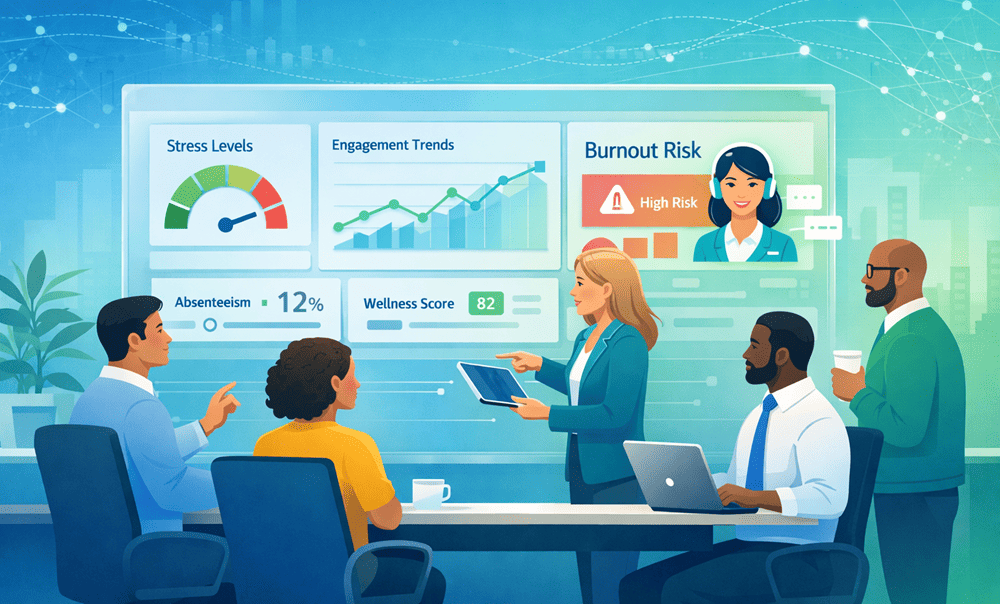
These metrics often appear inside an employee wellbeing dashboard, allowing HR leaders to monitor workforce health in real time.
Tracking Organizational wellbeing metrics like these helps leadership teams make informed decisions rather than relying on assumptions.
How Predictive Burnout Analytics Helps Prevent Employee Burnout
Burnout rarely appears overnight. It usually develops gradually through long working hours, unrealistic deadlines, or poor team communication.
Predictive burnout analytics helps companies detect early warning signs before employees reach exhaustion.
For example:
- A sudden drop in engagement scores
- Increased overtime across a team
- Higher levels of negative sentiment in employee feedback
When these signals appear together, HR teams can intervene.
Typical interventions may include:
- workload redistribution
- additional coaching support
- flexible scheduling options
Organizations that apply these insights effectively often connect them with Burnout prevention strategies that address both individual wellbeing and systemic workplace issues.
Building an Employee Wellbeing Dashboard for HR Leaders
To make analytics actionable, companies often build a centralized employee wellbeing dashboard.
This dashboard brings together multiple data streams and presents them in an easy-to-understand format for HR and leadership teams.
A typical dashboard may include:
- Real-time engagement trends
- Burnout risk scores by department
- Employee feedback sentiment analysis
- Stress indicators from wellness tools
By combining these signals, HR teams gain a more complete picture of workforce health.
Many organizations integrate these dashboards with AI productivity insights, allowing them to see how employee wellbeing connects with performance outcomes.
For example, a company might notice that teams with balanced workloads also show higher productivity and retention.
Ethical Considerations in Mental Health Analytics
While corporate mental health analytics provides valuable insights, organizations must handle employee data carefully.
Trust is essential. Employees need to feel confident that their personal wellbeing data will be protected.
Responsible companies follow several key principles:
- Collect only necessary wellbeing data
- Use aggregated insights instead of individual monitoring
- Maintain transparency about data usage
- Ensure strong privacy protections
When implemented ethically, analytics can support both employees and leadership.
Modern emotional health monitoring systems focus on identifying trends across teams rather than tracking individuals. This approach protects privacy while still offering useful insights.
Companies that prioritize transparency also see stronger adoption of Data-driven employee engagement programs because employees understand how their feedback contributes to workplace improvements.
Real-World Example: Data-Driven Wellbeing in Action
Many large organizations already use HR mental health reporting tools to improve workplace wellbeing.
For example, a multinational technology company recently introduced AI-based wellbeing analytics across its global workforce.
The company noticed through workforce mental health data insights that certain teams were experiencing higher stress levels due to constant deadline pressure.
Using these insights, leadership introduced several changes:
- mandatory meeting-free days
- improved workload planning
- digital mental health coaching
Within six months, employee engagement scores increased by 18%, while burnout-related absenteeism declined significantly.
This example shows how corporate mental health analytics can translate into practical workplace improvements.
The Future of Corporate Mental Health Analytics
Workplace wellbeing analytics is evolving quickly. Over the next few years, organizations will likely see several developments.
First, AI models will become more accurate at predicting burnout risk and identifying workplace stress patterns.
Second, analytics platforms will integrate more deeply with HR systems and collaboration tools, creating richer datasets.
Third, personalized support systems will become more common. Instead of offering generic wellness programs, companies will use analytics insights to deliver targeted interventions.
Organizations that combine AI wellbeing analytics with coaching platforms and behavioral insights will have a clear advantage in supporting employee mental health.
Why Corporate Mental Health Analytics Matters Now
Workplace expectations are changing. Employees want supportive work environments, while businesses need productive and resilient teams.
Corporate mental health analytics helps bridge that gap by providing measurable insights into employee wellbeing.
Instead of reacting to problems after they appear, organizations can take proactive steps to maintain a healthy workforce.
When used responsibly, analytics helps companies:
- understand employee stress patterns
- identify burnout risks early
- strengthen engagement and retention
- improve overall workplace culture
In the long run, organizations that invest in mental health analytics will likely see stronger productivity, higher employee satisfaction, and better business outcomes.
As companies continue to adopt advanced analytics tools, corporate mental health analytics will become a core part of modern HR strategy—turning workforce wellbeing data into meaningful action.