Markets don’t slow down to let organizations catch their breath. New technologies, shifting employee expectations, economic pressure, and constant change have become part of everyday business. In this environment, adaptability is no longer a leadership trait—it’s an organizational requirement.
This is where human + AI coaching enters the picture. Not as a replacement for human judgment, but as a system that helps companies build learning, awareness, and resilience across their workforce—at speed and at scale.
Traditional coaching models were never designed for this pace. One-to-one executive coaching works well for senior leaders, but it doesn’t reach managers, emerging leaders, or frontline teams consistently. Human + AI coaching changes that equation by blending human insight with intelligent systems that learn, adapt, and support employees continuously.
Why Adaptability Has Become a Board-Level Concern
Adaptability used to be framed as a “soft” capability. Today, it’s directly tied to revenue protection, employee retention, and execution speed. According to a 2024 McKinsey report, organizations that adapt faster to change are 2.4x more likely to outperform competitors on total returns to shareholders.
Yet many companies struggle to make adaptability practical. Training programs are often static. Leadership development happens in silos. Feedback loops are slow. Employees feel overwhelmed rather than supported.
This gap is one reason many enterprises are investing in AI-powered mental health coaching to support both performance and wellbeing during periods of constant change.
What Human + AI Coaching Really Means (And What It Doesn’t)
There’s a lot of noise around coaching technology. Let’s clarify terms.
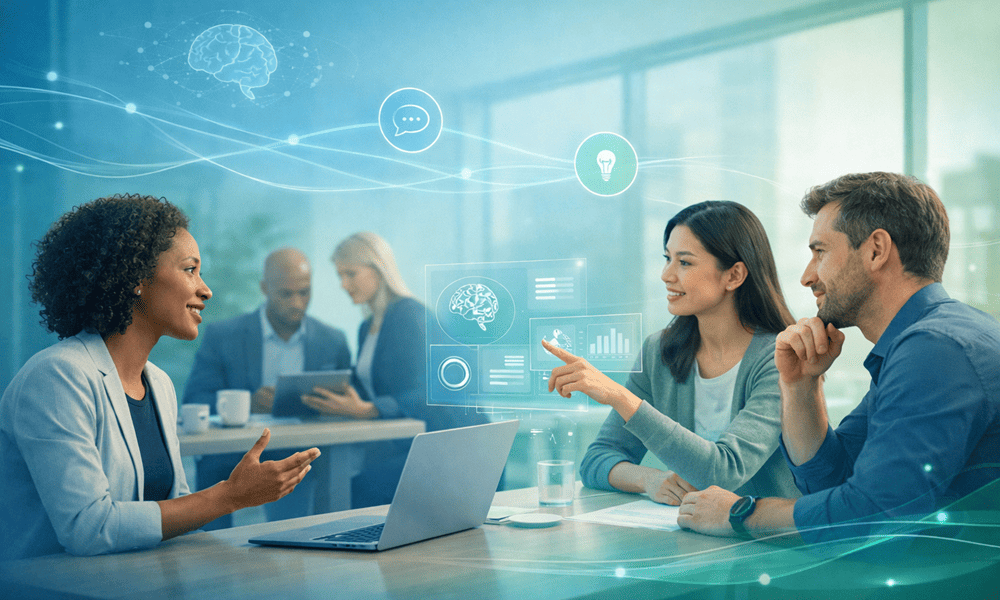
Human + AI coaching combines the emotional intelligence, context, and ethical judgment of human coaches with AI systems that offer structure, pattern recognition, and continuous availability. It’s not automated advice or generic self-help content.
Instead, it enables human and AI coaching to work together—each doing what it does best.
AI handles:
- Real-time check-ins
- Behavior pattern detection
- Scalable nudges and reflection prompts
Humans handle:
- Nuanced decision-making
- Complex emotional conversations
- Strategic leadership guidance
Together, they create coaching experiences that are both personal and scalable.
Why Scale Matters More Than Ever
Most organizations don’t lack intent—they lack reach. When coaching only touches the top 5% of leaders, adaptability stays concentrated instead of distributed.
Human + AI coaching enables scalable coaching solutions that reach managers, team leads, and individual contributors without lowering quality. This matters because adaptability doesn’t emerge from strategy decks. It shows up in daily decisions, conversations, and responses to stress.
This is also where mental fitness at scale becomes critical. Employees can’t adapt if they’re already running on empty.
How Human + AI Coaching Builds Organizational Adaptability
Adaptability isn’t a single skill. It’s a system of behaviors that reinforce learning, recovery, and responsiveness over time.
Human + AI coaching supports organizational adaptability in four key ways.
1. Continuous Awareness Instead of Annual Interventions
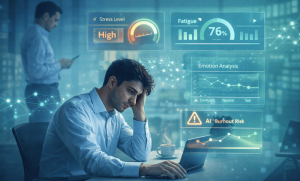
Traditional programs rely on annual surveys or quarterly training. AI-supported coaching works continuously, capturing patterns in stress, engagement, and behavior before they escalate.
This approach aligns closely with AI wellness coaching, which helps employees recognize early signals and adjust in real time rather than after burnout sets in.
2. Faster Learning Cycles During Change
When organizations go through restructuring, mergers, or technology shifts, employees often feel uncertain and disconnected. Coaching systems that combine human insight with AI guidance can support reflection, reframing, and decision-making during these transitions.
This strengthens agile workforce development, helping teams adapt without waiting for formal training rollouts.
3. Support for Managers Who Carry the Emotional Load
Managers sit at the intersection of performance pressure and people care. They are often expected to lead change while managing their own stress.
Human + AI coaching supports change management coaching by giving managers a space to process challenges, practice difficult conversations, and receive guidance aligned with company values.
This approach directly contributes to building resilient teams without adding more meetings or administrative burden.
4. Data-Informed, Human-Centered Decisions
AI can surface trends across teams—patterns of disengagement, overload, or friction—while human coaches interpret those signals within cultural and organizational context.
This combination helps leaders make better decisions about structure, workload, and support, rather than relying on instinct alone.
Where Human + AI Coaching Shows the Most Impact
Based on enterprise adoption patterns, companies see the strongest results in specific areas:
- Leadership transitions and succession planning
- Hybrid and distributed workforce support
- High-change environments such as tech, finance, and healthcare
- Organizations scaling rapidly across regions
These outcomes are closely linked to AI for leadership development, where coaching becomes a continuous practice rather than a one-time event.
Human + AI Coaching vs Traditional Coaching Models
To understand why this approach works, it helps to compare it with older models.
| Area | Traditional Coaching | Human + AI Coaching |
| Access | Limited to senior roles | Available across levels |
| Frequency | Periodic sessions | Ongoing, real-time |
| Cost efficiency | High per individual | Optimized for scale |
| Data insights | Subjective | Pattern-based + human insight |
| Adaptability | Reactive | Proactive |
This shift is also driving demand for workplace wellness technology that integrates coaching, wellbeing, and performance into one ecosystem.
The Role of Wellbeing in Adaptability
Adaptability breaks down when people are exhausted, anxious, or disengaged. No amount of strategy can override nervous systems under constant strain.
Human + AI coaching addresses this by supporting emotional regulation, reflection, and recovery—not just performance metrics. That’s why many organizations are pairing coaching programs with enterprise wellbeing solutions that support mental health alongside leadership growth.
As one CHRO from a global IT firm put it:
“Our biggest change wasn’t structural—it was giving people tools to think clearly under pressure.”
What Corporate Leaders Should Look for in a Human + AI Coaching Platform
Not all platforms are built the same. Leaders evaluating solutions should look beyond features and focus on outcomes.
Key considerations include:
- Ethical AI design and data privacy
- Evidence-based coaching frameworks
- Human oversight and escalation paths
- Integration with existing HR systems
- Measurable impact on retention and engagement
This is where thoughtfully designed AI coaching platforms stand apart from generic productivity tools.
Real-World Results: What the Data Shows
Organizations adopting human + AI coaching models report measurable gains:
- Deloitte found that companies investing in adaptive learning and coaching saw a 30% improvement in leadership effectiveness within 12 months.
- A Gartner study noted that scalable coaching programs reduced manager burnout by up to 25% in high-pressure roles.
These results point toward a future-ready workforce—one that learns continuously instead of reacting under pressure.
The Long-Term Advantage of Human + AI Coaching
Adaptability isn’t built through slogans or one-off workshops. It emerges when people feel supported, capable, and mentally prepared to handle change.
Human + AI coaching gives organizations a way to develop these capabilities across the workforce, without sacrificing depth or humanity. It blends speed with empathy, data with judgment, and structure with flexibility.
For companies navigating constant change, this isn’t a trend—it’s an operating advantage.
Final Thought
The question for leaders is no longer whether coaching matters. It’s whether their approach can keep up with reality.
Human + AI coaching offers a path forward—one that respects human complexity while meeting the scale modern organizations demand.