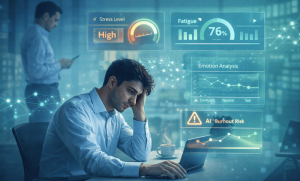
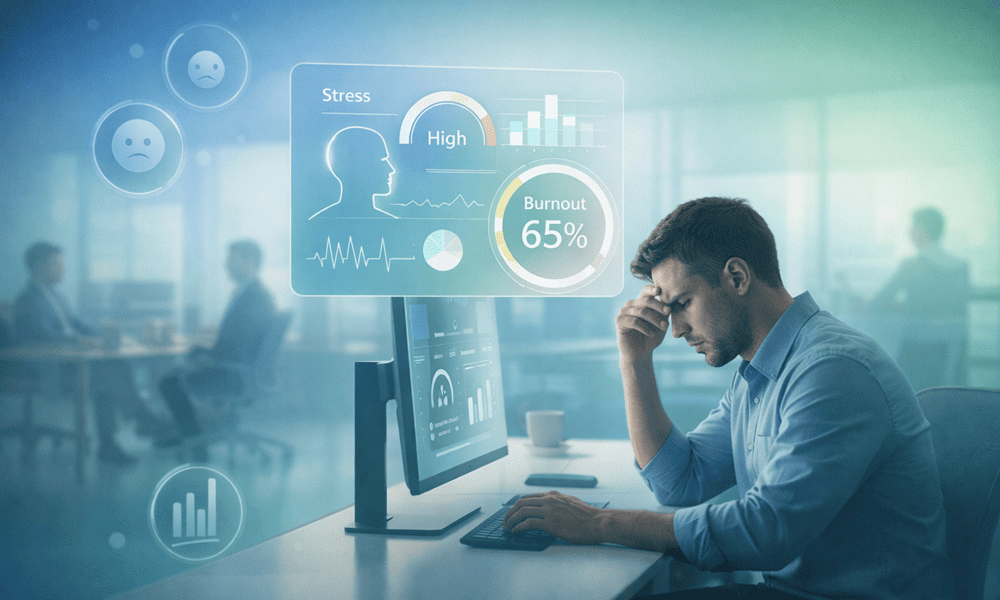
Burnout no longer looks like people crying at their desks or openly saying they cannot cope. In 2026, it hides behind polite emails, steady output, and people who never complain. This is what many HR leaders now call silent burnout. It quietly erodes focus, motivation, and loyalty long before anyone submits a resignation letter.
This is why AI burnout detection has become one of the most talked-about shifts in workplace mental health. Instead of waiting for stress to show up in exit interviews or medical leave, companies now use data, behavior signals, and machine learning to spot problems early and act fast.
For business leaders, this is not about replacing human care. It is about using technology to see what the human eye often misses.
What Silent Burnout Really Looks Like
Silent burnout is not dramatic. It is slow and subtle. Employees keep doing their jobs, but they do so with less energy, less attention, and less emotional connection. Over time, that leads to mistakes, low engagement, and eventually, people leaving without much warning.
Some common signs of silent burnout include slower response times, fewer contributions in meetings, and a sharp drop in creativity. These changes are hard for managers to notice, especially in remote and hybrid teams.
This is where behavioral analytics AI steps in. By tracking patterns across digital work tools, modern systems can spot early shifts that suggest someone is under pressure long before they reach a breaking point.
Why Traditional Burnout Checks No Longer Work
Most companies still rely on surveys, one-on-one meetings, or self-reported stress levels. These methods have two big problems. First, people often downplay how they feel because they worry about being judged. Second, surveys capture only a moment in time.
With AI burnout detection, organizations move from snapshots to ongoing insight. Instead of asking employees how they feel once a quarter, AI systems quietly analyze signals such as workload, communication style, and engagement trends.
This creates a living picture of emotional exhaustion at work, not a once-a-year guess.
How AI Coaches Track Stress Without Being Invasive
One of the biggest concerns about AI in the workplace is privacy. Modern systems are designed to look at patterns, not personal content. They focus on how people work, not what they say.
An AI wellness coach might notice that an employee who used to respond to messages quickly is now taking hours. Or it might detect that a team’s meeting load has jumped by 40% in a month. These changes often link to rising stress.
This kind of workplace stress monitoring gives leaders a way to step in early without putting employees under a microscope.
From Guesswork to Burnout Prediction
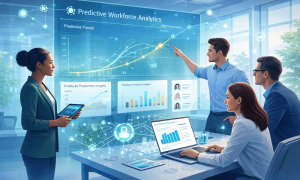
Burnout used to be something managers reacted to. Now it is something they can anticipate. By using historical data and live signals, burnout prediction models can flag risk before it becomes a crisis.
Here is how that usually works:
- The system tracks workload, meeting time, and response patterns
- It compares these signals to past burnout cases
- It calculates a risk score for teams and individuals
When risk rises, HR or managers get alerts so they can offer support or adjust workloads. This makes burnout prevention part of daily operations instead of a last-minute rescue.
The Business Cost of Missing Burnout
Many leaders still think of burnout as a personal issue. The numbers tell a different story. According to data from the World Health Organization and several large HR studies, burnout links to higher medical claims, more sick days, and increased turnover.
In customer service, for example, burned-out agents are more likely to quit within six months, which raises hiring and training costs. In tech teams, burnout often leads to errors that slow down product releases.
By using AI burnout detection, companies protect both people and profits.
How Employee Mental Health AI Supports Real People

Some worry that technology will make mental health support feel cold or distant. In practice, employee mental health AI does the opposite. It makes help easier to access and more personal.
When someone shows signs of strain, the system can suggest short breaks, breathing exercises, or a quick check-in. If stress keeps rising, it can recommend talking to a human coach or counselor through an AI mental health platform.
This layered approach makes sure no one falls through the cracks.
What Happens When AI Detects Risk
When the system flags a burnout risk, the goal is not to punish or label anyone. It is to offer support. Companies often follow a simple process:
| Step | What Happens |
| Risk detected | AI sees rising stress patterns |
| Alert sent | HR or manager gets a notice |
| Support offered | Employee gets optional help |
| Review | Workload or schedule is adjusted |
This keeps the focus on care, not control, and supports emotional wellbeing at work across the organization.
Why Digital Tools Beat Old-Style EAPs
Employee Assistance Programs were built for another era. They often rely on phone lines and long wait times. In today’s fast-paced work culture, that is too slow.
Many firms now use digital EAP alternatives that offer instant access to coaching, therapy, and self-help tools through apps and chat. These platforms work well with AI systems that can guide employees to the right support at the right time.
The result is faster help and better outcomes.
How Managers Use Burnout Data
One of the most helpful parts of AI burnout detection is how it supports managers. Instead of guessing who might be struggling, they get clear signals about team health.
This helps leaders plan better, distribute work more fairly, and avoid pushing people too hard for too long. Over time, this builds trust and improves performance.
The Role of Workplace Stress Management
Good workplace stress management is not about removing all pressure. It is about keeping pressure at a level people can handle. AI systems help by showing when workloads, deadlines, or meeting volume go too far.
With this insight, companies can redesign how work gets done instead of blaming individuals for feeling overwhelmed.
The Future of Burnout Detection
As AI models get better, AI burnout detection will become even more precise. Future systems will combine voice, text, and biometric data to give a fuller picture of how people feel at work.
This does not replace human care. It supports it by making sure the right people get help at the right time.
Why Business Leaders Should Care
Silent burnout is one of the biggest hidden risks in modern organizations. It lowers output, raises turnover, and damages culture. By using AI to spot stress early, leaders protect their teams and their results.
The companies that succeed in the coming years will not be the ones that push hardest. They will be the ones that listen best, even when the signs are quiet.