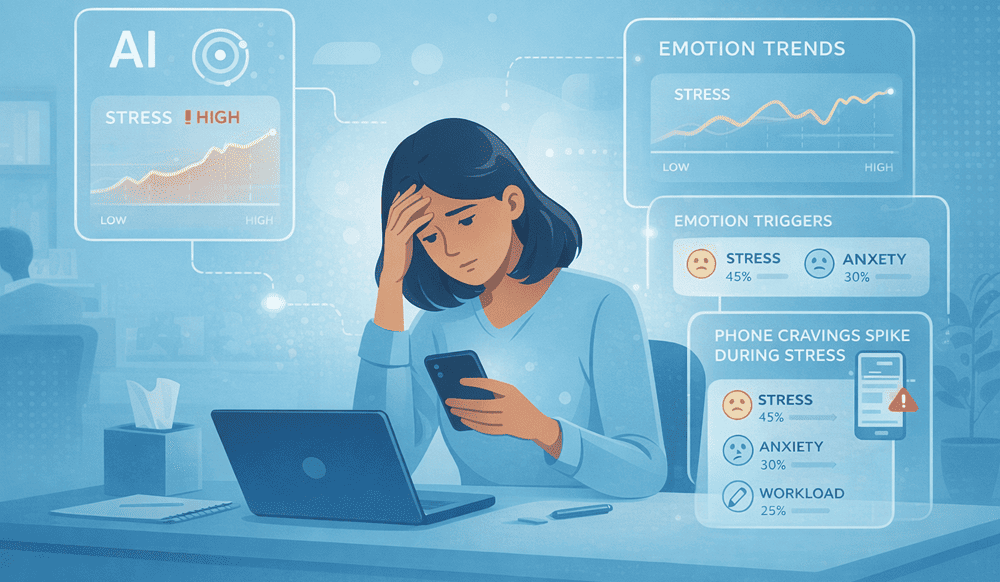
Smartphones were meant to help people work faster. Instead, for many professionals, they have become a quiet drain on focus, emotional balance, and output. Behind most cases of excessive phone use is not laziness or poor discipline—it is emotion. Stress, pressure, uncertainty, and anxiety often drive people to reach for their phones without thinking.
This is where AI is changing the conversation. Modern systems no longer treat phone addiction as a time-management issue alone. They look deeper, identifying why people feel compelled to scroll, check, or tap. Understanding emotional triggers phone addiction is now central to helping organizations reduce productivity loss and protect employee wellbeing.
The Emotional Side of Phone Addiction at Work
In professional environments, phone overuse rarely comes from boredom alone. It is often tied to emotional responses triggered throughout the workday. Tight deadlines, ambiguous expectations, performance pressure, and social dynamics all create moments of discomfort.
Phone usage becomes a coping reflex. A quick scroll offers distraction, a sense of control, or short-term relief. Over time, this habit strengthens, contributing to phone addiction at work and creating a cycle that is hard to break.
Research shows that employees check their phones dozens of times per hour during high-pressure days. These interruptions increase mental fatigue, delay task completion, and weaken deep thinking. The result is visible as workplace distraction and gradual productivity decline.
Why Emotional Triggers Matter More Than Screen Time
Most digital wellness efforts focus on limiting usage hours. While helpful, this approach misses the root cause. Two people may spend the same amount of time on their phones for very different reasons.
One might be responding to urgent work needs. The other might be reacting to emotional discomfort through stress-driven scrolling. Without understanding the trigger, reducing access alone often fails.
AI systems are now built to recognize these emotional patterns rather than just count minutes. This shift allows organizations to move from restriction to prevention.
How AI Detects Emotional Triggers in Real Time
Modern AI platforms combine multiple data signals to identify emotional states connected to phone overuse. These systems rely on behavioural analytics rather than invasive monitoring.
Signals may include:
- Interaction timing patterns
- App-switching frequency
- Response latency during work hours
- Repetitive checking behavior after meetings or deadlines
By mapping these patterns, AI builds a picture of mobile craving patterns that often align with emotional stress points.
In many cases, spikes in phone use appear right after emotionally demanding moments—performance reviews, conflict-heavy calls, or extended multitasking periods. This data gives leaders visibility into unseen friction across teams.
The Role of AI Emotion Tracking in Workplace Wellness
AI emotion tracking focuses on trends rather than individual surveillance. It looks for collective shifts that indicate emotional overload within teams or roles.
For example, consistent increases in non-work app usage during late afternoons may signal decision fatigue. Morning spikes may point to anxiety about daily priorities. Over time, these insights support AI for mental health wellbeing by highlighting when emotional strain is building up before burnout emerges.
Instead of asking employees to self-report stress—which many avoid—organizations can respond based on real behavioural signals.
From Anxiety Habits to Awareness
Unchecked phone use often becomes part of deeper anxiety habits. Employees feel restless when separated from their phones, worried about missing updates or messages. This constant alert state raises cognitive load and reduces focus improvement.
AI systems help interrupt this pattern by surfacing awareness gently. Rather than blocking access, they introduce moments of reflection—short pauses that ask users to notice why they reached for their device.
This approach aligns with principles used in AI CBT, where awareness precedes behavioural change. When people understand their triggers, they are more likely to adjust habits without resistance.
How Behavioural Analytics Drives Smarter Interventions
Behavioural analytics allows AI tools to personalize interventions based on emotional patterns, not generic rules.
For instance, an employee who scrolls heavily after client calls may receive short grounding prompts during those windows. Someone whose usage spikes during late-night hours might get reminders to disengage earlier.
These interventions feel supportive rather than controlling. Over time, users learn to associate emotional discomfort with healthier responses instead of reflexive phone use. This is where personalized wellness AI becomes far more effective than blanket policies.
Where Workplace Mindfulness Fits In
Emotional regulation improves when employees have tools to pause and reset. AI-driven systems often integrate short reflective exercises, breathing prompts, or cognitive reframing moments.
These features reinforce workplace mindfulness by meeting employees where stress actually occurs—not in workshops, but in real moments of overload.
Used consistently, these micro-interventions reduce emotional reactivity and support steadier attention throughout the workday.
What the Data Shows: Productivity and Emotional Awareness
Industry studies suggest that employees who receive timely, emotion-aware nudges show measurable gains in task completion speed and reduced context switching. Organizations using AI-based behavioural insights report lower absenteeism and stronger engagement scores within months.
Importantly, these gains come without adding workload or forcing rigid controls. Employees feel supported, not watched.
“The goal isn’t to eliminate phone use. It’s to reduce emotional dependency on it during work.”
This distinction is key for leadership teams evaluating digital wellness investments.
Practical Ways AI Helps Reduce Phone Addiction at Work
In real workplace settings, AI tools address emotional triggers through a mix of insight and action.
They commonly support organizations by:
- Identifying stress-linked usage windows
- Mapping emotional risk periods across teams
- Encouraging healthier breaks instead of scrolling
- Supporting focus recovery after high-pressure tasks
- Offering anonymized trend data for leaders
These capabilities connect emotional wellbeing directly to performance outcomes, strengthening AI mental fitness across the organization.
Why Business Leaders Should Care
For corporate decision-makers, phone addiction is not a personal issue—it is an operational one. Emotional overload increases error rates, slows execution, and weakens collaboration. Over time, this affects customer outcomes and talent retention.
AI-powered emotional insight helps leaders move beyond assumptions. Instead of blaming distractions, they can address underlying pressure points that drive unhealthy coping behaviors.
This makes wellness efforts more credible, measurable, and aligned with business goals.
The Future of Emotional Intelligence at Work
As AI continues to evolve, emotional trigger detection will become a core part of workplace design. Systems will adapt workflows, communication timing, and task distribution based on emotional load—not just availability.
Organizations that adopt these tools early will gain a more resilient workforce, better focus patterns, and healthier digital relationships.
Reducing emotional triggers phone addiction is not about discipline. It is about awareness, timing, and smarter support. AI finally gives businesses the tools to act before habits turn into harm.