Excessive screen time is no longer just a personal issue—it has become one of the fastest-growing workplace wellbeing challenges. For working professionals, constant notifications, app switching, digital overload, and late-night scrolling have created a cycle of distraction and fatigue that impacts productivity, focus, and mental health.
Breaking this cycle is difficult because screen time habits are largely unconscious and dopamine-driven. However, AI has emerged as a powerful enabler that helps employees regain digital balance through personalized nudges, behavioural insights, and adaptive support.
This article explains how AI helps working professionals reduce screen time, rebuild healthier digital behaviours, and reclaim control over how and when they use their devices.
The Modern Screen Time Problem for Professionals
Most professionals spend between 7–9 hours a day in front of screens—excluding personal device usage. Add post-work doom scrolling or work emails checked late at night, and screen exposure becomes a chronic wellbeing risk.
Common issues include:
- Reduced attention span
- Sleep disturbances
- Digital fatigue
- Stress from constant notifications
- Difficulty focusing on deep work
- Emotional dependency on mobile devices
Traditional advice like “use your phone less” doesn’t work because screen time habits are neurological. This is where AI provides a smarter, more scientific approach.
1. AI Identifies Hidden Patterns Behind Excessive Phone Use
AI wellbeing tools use behavioural analytics to detect where, when, and why professionals fall into phone overuse. This is crucial because many employees don’t realise the triggers driving their screen habits.
AI uncovers:
- Time of day when screen use spikes
- Emotional triggers behind scrolling
- Work-related stress patterns
- Peak distraction windows
- Habit loops tied to boredom, anxiety, or fatigue
- Specific apps consuming disproportionate time
By mapping digital behaviour, AI creates a clear picture of the root cause not just the symptoms of excessive phone habits.
These insights guide personalized interventions that feel supportive rather than restrictive.
2. Smart Nudges Help Break Autopilot Scrolling
AI-powered nudging tools deliver timely, context-aware reminders that help professionals pause and rethink their device use. Unlike standard notification blockers, AI nudges are adaptive and personalized.
AI nudges may include:
- A reminder when doom scrolling begins
- A calming breathing prompt during stress-triggered phone use
- Suggestions to switch to offline tasks
- Encouragement to take micro-breaks
- Gentle alerts about hitting personal screen limits
These mindfulness reminders interrupt automatic behaviour loops and create space for healthier choices—without forcing digital abstinence.
Some nudges are also linked to wellbeing tools such as workplace mindfulness exercises or emotion-regulation micro-practices driven by AI CBT.
3. AI Helps Deepen Focus Through Smart Attention Management
Attention is the most valuable currency for working professionals. AI supports focus by reducing unnecessary digital interference.
AI supports focus by:
- Predicting which apps will trigger distraction
- Recognizing when multitasking becomes overwhelming
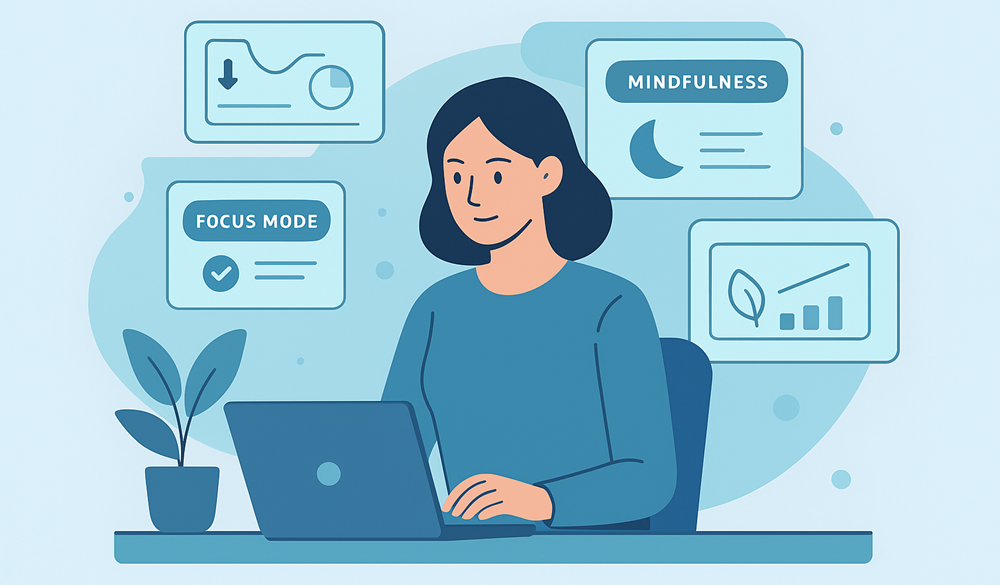
- Recommending focus modes during deep work
- Auto-blocking certain notifications during peak productivity
- Identifying when context switching becomes excessive
Professionals experience more clarity, fewer mental interruptions, and better control over daily flow.
These tools often integrate into AI wellness ecosystem platforms, helping employees monitor their digital and emotional wellbeing in a unified dashboard.
4. Emotional Triggers Are Addressed With AI Mental Health Support
Screen time habits often arise from emotional patterns: stress, loneliness, anxiety, boredom, and overwhelm. AI tools help uncover these emotional drivers and provide immediate support.
For example:
- When scrolling is triggered by anxiety, AI suggests grounding exercises.
- When overuse stems from work stress, AI prompts a mini-break or quick reflection.
- When scrolling is used to escape uncomfortable emotions, AI coaching tools offer healthier coping strategies.
By surfacing emotional triggers, AI acts as a gentle wellbeing companion—not a digital parent.
This aligns with behavioural change programs inside AI for mental wellbeing platforms, where cognitive patterns, emotional cues, and digital habits come together in an integrated model.
5. AI Recommends Healthier Micro-Habits That Replace Screen Time
Breaking a habit is easier when it’s replaced—not removed. AI-powered wellbeing apps suggest micro-habits tailored to each user’s routines and stress levels.
These may include:
- 60-second breathing practices
- Short grounding routines
- Hydration reminders
- Desk stretching prompts
- 2-minute resets between tasks
- Quick mood check-ins
Replacing scrolling with mindful activities reduces the emotional dependency on phones and strengthens healthier long-term behaviour.
Some recommendations also link to social anxiety solutions or workplace mindfulness programs when the underlying cause is emotional depletion or meeting-related stress.
6. AI Supports Healthy Digital Boundaries for Work-Life Balance
When employees constantly check emails, Slack messages, or notifications after work hours, burnout becomes inevitable. AI tools help professionals set—and maintain—healthier digital boundaries.
AI systems can:
- Suggest ideal “digital shutdown” times
- Detect late-night laptop or phone activity
- Warn about declining cognitive energy
- Block work-related apps after a chosen hour
- Recommend sleep hygiene practices
These boundaries help protect mental space, improve sleep, and prevent the “always on” mindset that fuels burnout.
7. Personalized Digital Wellbeing Plans for Long-Term Habit Change
AI doesn’t just stop at identifying habits—it adapts to each individual’s behaviour over time. By analyzing progress, challenges, mood patterns, and lifestyle factors, AI builds personalized digital wellbeing plans.
These long-term plans may include:
- Weekly screen time summaries
- Behaviour improvement charts
- Mood-technology correlation insights
- Adaptive goals based on progress
- Recommendations when regressions occur
This ensures professionals stay accountable while also supported.
Digital wellbeing plans often integrate into broader solutions such as AI CBT, AI for mental wellbeing, and other tools within an AI wellness ecosystem, creating a comprehensive behavioural transformation system.
Why AI Works Better Than Traditional Screen-Time Methods
Traditional tools often rely on self-control, but cell phone addiction is neurological.
AI works better because:
- It adapts to personal behaviour
- It understands emotional triggers
- It delivers context-aware reminders
- It analyzes patterns in real time
- It removes digital friction automatically
- It builds healthier routines with micro-interventions
Professionals feel empowered not restricted to build healthier relationships with technology.
The Future: AI as a Personal Digital Balance Coach
The future of screen-time wellbeing is one where AI becomes an always-available, emotionally intelligent digital balance coach. It will help professionals:
- Maintain focus
- Protect mental health
- Strengthen mindful tech habits
- Break emotional triggers for phone use
- Maintain sustainable digital boundaries
As screen time continues to increase in modern workplaces, AI provides one of the most scalable and effective ways to build healthier digital habits.